 A Space for Thoughtful
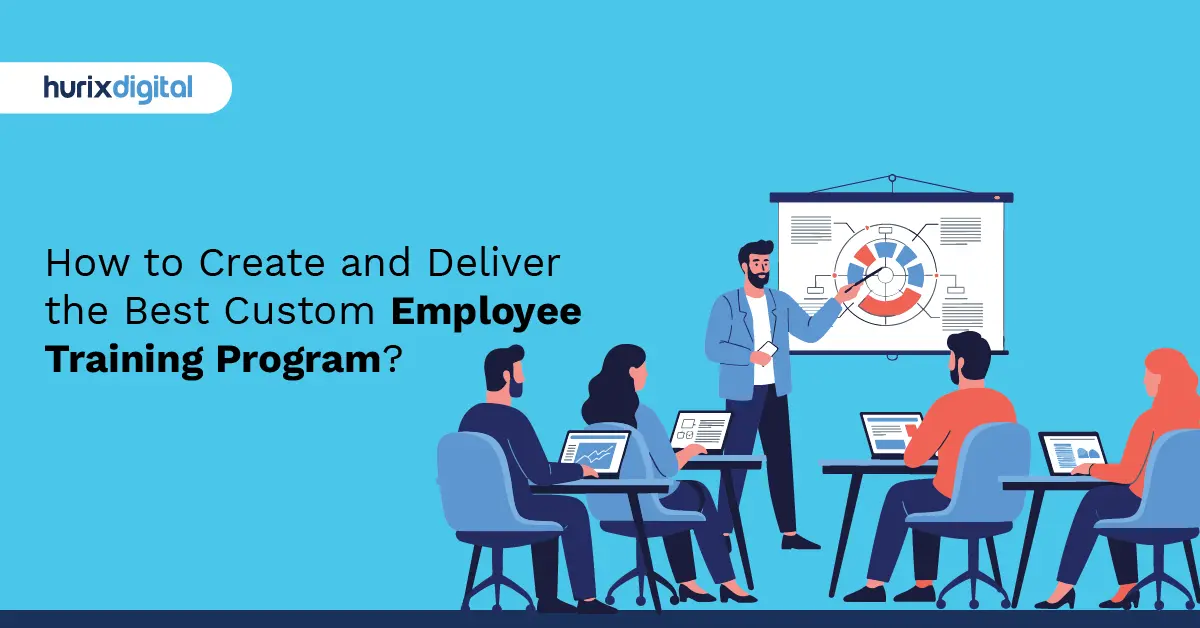
How to Create and Deliver the Best Custom Employee Training Program?
Summarize with:
An efficient custom employee training program addresses the needs of your organization and employees. Factors like industry-targeted requirements, technological advancements, and employee roles affect the structure and functioning of your training program.
For example, in a healthcare company, the training might be focused on medical innovations, compliance, and patient care.
Whereas, for your tech firm, it might involve a more software-based approach, cybersecurity protocol training, and coding language programs. Once you identify the training needs, custom corporate training sessions can be easily developed. These customized training sessions can be online, in-person workshops, or a blended approach.
When you invest in proper L&D programs, your company flourishes and ensures a better Return on Investment.
Table of Contents:
- Benefits of a Custom Employee Training Program
- Building and Delivering an Effective Custom Training Program
- Aim for Goal-Driven Training
- Keep Content Relevant
- Accommodate Different Learning Approaches
- Enhanced Access to Learning Materials
- Improves Knowledge Retention and Recall
- Focuses on Skill-Based Needs of the Employees
- Allows Employees to Learn On the Go
- Time-Efficient Way to Close the Learning Gaps
- Offers a Distinct Assessment System
- Reduces the Overall Training Time
- Ties Learning into Real-World Applications
- Case Study: Custom Employee Training Program at Nestlé
- To Wrap Up
Benefits of a Custom Employee Training Program
Before you learn the ropes of building and delivering a custom corporate employee training program effectively, it’s important to fully grasp why you need it in the first place. It helps the organization’s top brass, as well as the L&D teams, get invested in the process.
Here are the top benefits personalized training brings to the table:
- Focused Learning: Since these training modules are designed to meet specific individual needs, the content of the program fills the gap between the existing and desired skill sets.
- Enriched Teams: With different custom corporate training programs for different employees based on their expertise and future job requirements, all members working on different teams or projects can bring unique skills and experiences to the table.
- Ease of Application: Any employee training program in a workplace is considered successful when the participants understand the concepts well enough to apply them in their day-to-day work processes. With case studies and exercises tailored to the actual work environment, customized training programs can facilitate that.
- Flexibility: Customization also helps in optimizing content, budget, and time allocated to the training process by using the right tools and media according to the audience.
- Better Operational Efficiency: A customized employee training program can serve as the blueprint for an organization’s operational procedures and policies, streamlining processes across the board.
- Cost-Effectiveness: Contrary to the perception that tailoring the program to suit the individual needs of every staff member would cost a lot, this approach can be extremely cost-effective. What you spend on customized training of employees, you recover doubly when it translates into valuable employee output.
Building and Delivering an Effective Custom Training Program
The goal of a truly personalized training experience is to engage participants by offering them unique and relevant insights and experiences.
Here are four key elements of building and delivering an employee training program that delivers on that goal:
1. Aim for Goal-Driven Training
Any training initiative holds real meaning for the participants only if it aligns with their own professional goals. This could range from excelling in their current job profiles to learning skills that set them apart from the rest of the workforce. The starting point of any effective employee training program has to be getting the employees to define their own goals.
With that achieved, the next part of the puzzle is to ensure that your program helps them work towards those goals. This can mean including task performance-related activities and exercises for some employees and upskilling for a bigger role for others. This ensures that the employees are invested in the training they undergo.
Another way to optimize the learning takeaway with custom training programs is to make them engaging through interactive elements such as clickable learning paths, videos, infographics, and games. Follow up with incentivized exercises to promote retention.
2. Keep Content Relevant
The whole idea behind custom corporate programs is to put participants on a learning path relevant to the skill gaps that need to be filled for them to fulfill their goals. For this, the content must be concise and pertinent.
You can customize the learning module such that your employees can get straight to what they need to learn instead of sifting through stuff they don’t need or brushing up on what they already know.
A well-designed, agile learning management system (LMS) can facilitate this by allowing you to assign content, exercises, and eLearning resources to different people as per their specific requirements.
Within these highly personalized learning modules, too, employees can be given the freedom to choose the content most applicable to their upskilling needs. This approach, known as micro-learning, has proven to keep employees engaged and motivated to complete the training process.
3. Accommodate Different Learning Approaches
In custom training development, the Learning and Development (L&D) team must account for various approaches and accommodate different learning styles to ensure the content has the desired impact on every employee.
In such cases, a personalized touch can be added to the training program by taking into account different learning processes and speeds.
For example, some employees may be verbal learners, who prefer to do things the old school way of reading from notes, while some others may find it easy to retain things conveyed through visuals, and some others still may be aural learners (who prefer audio resources).
While custom training development, the L&D team must account for all these different approaches and accommodate different styles of learning to make sure the content has the desired impact on every single employee.
This can be achieved by creating a base of content and then making it available to employees in various formats, including written, visual, audio, webinars, discussion boards, and more.
4. Enhanced Access to Learning Materials
Pressing deadlines, big projects, and buzzing schedules have changed the basic ethos of a typical workplace today. There are no designated lunch hours for the entire staff or 9-to-5 work hours anymore. A lot of times, many employees may even be working off-site or remotely.
You have to take these variables into account while designing an employee training program and be mindful of the fact that it may not be possible to get all of the participants in a room together.
By offering round-the-clock access to the training material on your LMS, you empower the employees to choose how, where, and when they learn. This can be achieved by making content accessible across a range of devices, including laptops, computers, smartphones, and tablets, allowing anyone with an internet connection and a digital device to participate at their convenience.
For example, an employee working from home might have a child’s school event during traditional training hours. With on-demand access to training modules, they can complete their lessons in the evening or early morning, accommodating their personal schedule without compromising their professional development.
7 ways custom content helps improve employee performance
1. Improves Knowledge Retention and Recall
Retention of information and its successful application is one of the key objectives of training employees. Custom training content fulfills this objective as it is specifically designed to incorporate company experiences by integrating real-world examples, something employees are more likely to connect to.
It allows them to gain a better understanding of the concepts. Further, this also improves the chances of employees being able to recall the information later while performing their respective job responsibilities.
2. Focuses on Skill-Based Needs of the Employees
One of the main features of any effective training content is its relevance to the target audience. If the course is not relevant enough for your employees, neither would it be of any help to them, nor would they like to engage with it.
However, with custom training content, you will benefit from directing your content towards a particular skill or topics suited to your employees’ needs. This will help them improve their performance, achieve various organizational objectives, and also keep them engaged throughout.
3. Allows Employees to Learn On the Go
Another advantage of custom training content is that it gives the flexibility to learn from anywhere at any time. With custom content, training is not just restricted to the availability of trainers, respective time schedules, or a physical location.
It is an excellent way to improve employee performance as the content can be customized to offer employees various tutorials, reference guides, and other similar options that make the information accessible quickly and easily. In addition to this, the ability to learn anywhere from any device also helps to save a great deal of employee time and make learning much more convenient.
4. Time-Efficient Way to Close the Learning Gaps
Custom content is an effective way to close knowledge gaps between where the learners are and where they need to be. This allows organizations to focus on the specific skills and competencies needed for success in an individual employee’s profile, team, or department.
Further, well-designed custom training content is designed, structured, and delivered in multiple formats.
5. Offers a Distinct Assessment System
Assessment plays an important role in employee training as it is not possible to determine the impact of training and measure ROI without any means to evaluate employee performance.
Custom training content addresses this issue and allows you to have distinctly targeted assessments. This ensures that employees learn the essential skills without wasting their valuable work time and enhancing their performance.
6. Reduces the Overall Training Time
Custom training content gives organizations an opportunity to create short online training courses that can be completed in much less time while still improving employee performance. This is simply because employees no longer have to sit through entire eLearning courses that are full of unnecessary information, as in the case of most pre-built online courses.
The advantage of custom content is that it can be customized to include only what the employees need to know, depending on their individual learning needs and objectives defined in the course. This allows the employees to apply the knowledge in their day-to-day work more quickly, without worrying about the completion of lengthy courses.
7. Ties Learning into Real-World Applications
To offer employees the real value of an online training course, it must tie into real-world situations. Custom training content is an excellent way to make them learn about applying the knowledge they have learned in the real world.
Further, it allows employees to immediately see how the knowledge acquired can be useful to them on the job. They can also participate in various activities that are designed as part of the training program, which enables them to both fine-tune their skills and expand their knowledge base.
Case Study: Custom Employee Training Program at Nestlé
Nestlé, a global leader in nutrition, health, and wellness, prioritizes employee development as a core aspect of its corporate strategy.
The case study examines the creation and delivery of a custom training program that aligns with organizational goals, enhances employee performance, and supports career growth.
Background
- Commitment to Development: Nestlé recognizes that a skilled workforce is essential for maintaining its competitive edge.
- Framework: The company’s People Development Review outlines a systematic approach to training and development aimed at equipping employees with the necessary skills in a dynamic market.
Objectives of the Training Program
- Boost continuous learning and personal development.
- Enhance employee engagement and retention.
- Align skills development with business objectives.
- Ensure compliance with industry standards and regulations.
Key Components of the Custom Training Program
- Needs Assessment:
- Conducts comprehensive assessments to identify skills gaps and training needs across departments.
- Utilizes feedback from employees, managers, and performance reviews to ensure relevance and impact.
- Tailored Training Solutions:
- Develops customized training solutions based on the needs assessment, catering to specific roles and career paths.
- Offers a variety of training formats, including on-the-job training, eLearning modules, workshops, and leadership development programs.
- Blended Learning Approach:
- Combines online learning with in-person workshops for a flexible learning experience.
- Allows employees to learn at their own pace while benefiting from hands-on experiences and direct interaction with trainers.
- Integration of Technology:
- Utilizes advanced technology, including Learning Management Systems (LMS), to track employee progress and facilitate virtual learning environments.
- Continuous Feedback and Improvement:
- Prioritizes ongoing feedback from participants to assess training effectiveness.
- Uses this feedback to refine content, delivery methods, and overall strategy, ensuring alignment with employee needs and organizational goals.
- Nestlé’s commitment to employee training has led to various positive outcomes, including improved employee performance metrics, increased engagement, and enhanced retention rates. The training programs reinforce Nestlé’s dedication to continuous learning and development.
To Wrap Up
We live in a time where customized experiences are expected just about anywhere, and an employee training program is not an exception to that expectation. Giving your employees control over what and how they choose to learn can improve the outcome of these programs. So, make it count.
In this regard, partnering with Hurix Digital can be a transformative step for your organization. They specialize in creating tailored learning solutions that cater to the unique needs of your workforce.
Whether you need engaging digital content, cloud solutions, or AI-driven learning platforms, we have the expertise to enhance your employee training programs. Get in touch with us to learn how we can help you elevate your training initiatives today!
Summarize with:

Chief Learning & Innovation Officer –
Learning Strategy & Design at Hurix Digital, with 20+ years in instructional design and digital learning. She leads AI‑driven, evidence-based learning solutions across K‑12, higher ed, and corporate sectors. A thought leader and speaker at events like Learning Dev Camp and SXSW EDU