 A Space for Thoughtful

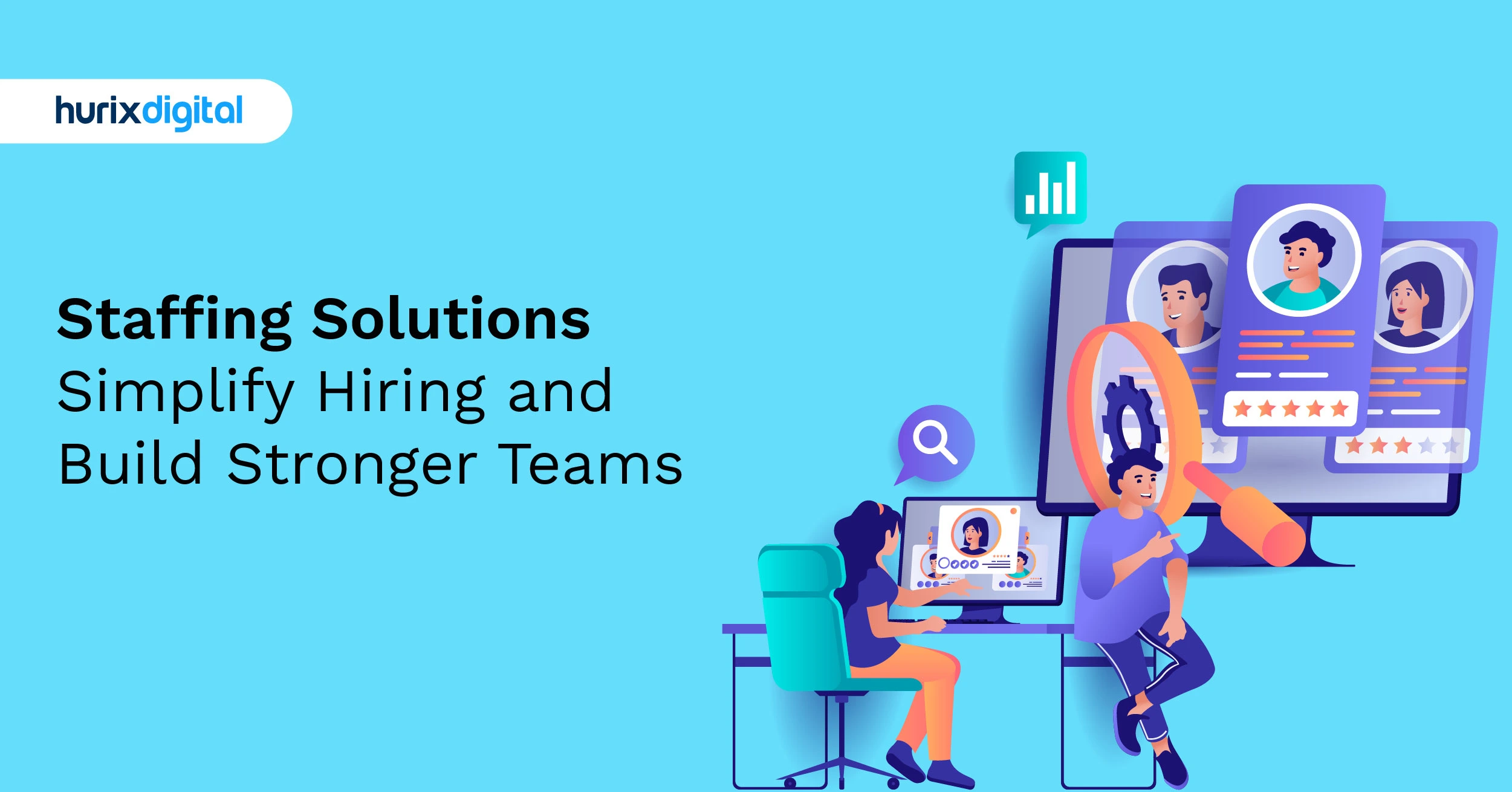
Staffing Solutions Simplify Hiring and Build Stronger Teams
Summarize with:
Hiring the right talent to fill an organization’s vacancies often defines its long-term and short-term success. However, with time, staffing solutions must evolve with the change in demand or the landscape in your specific niche.
The global job market is facing unprecedented challenges. Employers are experiencing a talent crisis, regardless of the company’s size and industry. While several jobs are available, there is a shortage of workers. This is where strategic and flexible staffing comes in. With the market as saturated as it is and with the digital transformation summoned by the pandemic, staffing solutions have witnessed immense change. If you’re looking to hire the best talent for your organization but aren’t sure how to navigate the process, this guide will help. We’ll explore what modern staffing solutions entail, how they’ve evolved, and how you can leverage them to build a resilient, high-performing team.
Table of Contents:
- What are Staffing Solutions?
- How Have Staffing Solutions Evolved: The Role of Digitalization
- The Shift to Strategic and Flexible Staffing
- Key Solutions and Strategies for Efficient Hiring
- What is a Staffing Solutions Agency and How Does It Work?
- 10 Reasons You Need Staffing Solutions Services
- Get Access to Industry and Hiring Expertise
- Hire Candidates Faster
- Simplify Payroll Process
- Enhance Productivity
- Reduce Overhead Costs
- Access an Extensive Network of Talent
- Observe Candidates Before a Permanent Hire
- Leverage Technology Staffing Solutions
- Implement Virtual Staffing
- Improve Return on Investment (ROI)
- Navigating Global Talent Sourcing
- Navigating Legal and Compliance Risks in Staffing
- The Future of Staffing: AI, Data, and Automation
- Conclusion
What are Staffing Solutions?
Staffing solutions refer to the range of services a staffing solutions company offers. This includes permanent staffing, temporary staffing, contract staffing, Recruitment Process Outsourcing (RPO), Managed Services Provider (MSP), and more.
Such companies mainly aim to satisfy and manage an organization’s workforce needs. This means helping a business find, hire, and retain top talent for all open positions in the organization. Strategic staffing goes beyond simply filling open positions. It’s a comprehensive method that involves meticulously analyzing your business needs, both present and future. This analysis helps HR managers identify the right talent with the skills and experience required to propel your organic growth.
How Have Staffing Solutions Evolved: The Role of Digitalization
Staffing solutions aren’t what they used to be. The ins and outs of this service have become more systematic and all-encompassing thanks to digitalization. Here’s how:
1. Unlimited Reach
A staffing solutions organization’s reach was limited before implementing digital tools and software in staffing services. But with the arrival of professional platforms and social media, their reach has widened extensively. There are zero geographical boundaries whatsoever. This shift allows a company in Chicago to now easily hire a developer in Chennai, breaking down old barriers.
2. Quicker Hiring
Today, an IT staffing agency takes help from powerful tools like Applicant Tracking Systems (ATS) and Artificial Intelligence (AI) to supplement its services. They accelerate the entire process – from application management to interviews – that used to be extremely time-consuming and tedious. Thus, hiring has become faster and more efficient.
3. Competitive Edge
Staffing agencies employ cutting-edge technology to optimize social media and other professional platforms to better meet their clients’ expectations. This gives them a competitive edge. Before the technological renaissance, achieving this advantage was next to impossible.
4. Enhanced Talent
The implementation of advanced technology has made it possible for a staffing company to reach out to better talent without extra effort. Digitalization enables recruiters to easily acquire top talent without any chance of fraud or misidentification.
5. Better Experience
Earlier, the overall experience of hiring staffing solutions used to be tedious. It involved lots of paperwork and manual labor to convey a company’s expectations and requirements with every hire. Now, technology has made it swift and efficient, and with AI, the entire process has become more flexible, intuitive, and engaging. Companies can now effortlessly scale their staff based on their immediate and long-term needs, knowing that their staffing company has all the necessary information at their fingertips to deliver the best quality.
The Shift to Strategic and Flexible Staffing
The workforce management landscape constantly changes, from market dynamics to skill set requirements. The ability to adapt is paramount for organizational success. With this in mind, traditional workforce planning often lacks the agility to navigate uncertainties. This is precisely where flexible staffing comes in.
Flexible staffing refers to a method of workforce management that adjusts staffing levels, schedules, and workforce composition so that organizations can adapt to changing business demands. A survey shows that 87% of candidates prefer to be a part of flexible staffing solutions. This approach became increasingly popular after 2020, demonstrating its value during seasonal spikes and project-based work.
The strategic value goes beyond cost and speed. Flexible hiring creates access to expertise that organizations could never justify maintaining full-time. Need someone who understands both blockchain technology and supply chain logistics? Good luck finding that unicorn as a permanent hire. But as a consultant for a three-month project? Totally doable.
Here are the key benefits flexible and strategic staffing models bring to the table:
- Agility and Adaptability: An agile organization can reduce response time to what the market needs. Flexible staffing provides this agility, allowing businesses to reorganize their workforce quickly and adjust to evolving strategic goals.
- Scalability: Flexible staffing allows organizations to seamlessly scale up or down their operations amidst fluctuating workloads and project requirements with minimal risk.
- Cost Efficiency & Optimization: When traditional staffing methods are used for short-term workload fluctuations, cost and resource efficiency shrink. With flexible staffing, you can optimize your workforce and manage costs effectively by strategically deploying a mix of full-time employees, contract staffing, and temporary workers.
- Workforce Diversity: By accommodating different work arrangements, businesses can attract potential hires with diverse backgrounds, skills, and perspectives, ultimately fostering a more inclusive and innovative workplace.
- Improved Decision-Making: Strategic staffing provides data-driven insights into your workforce needs. This empowers HR managers to make informed decisions regarding hiring, training, and development.
Key Solutions and Strategies for Efficient Hiring
With the various elements of the staffing process out of the way, let’s dive into key solutions that can help you hire the right talent for your organization and do so efficiently.
1. Create Candidate Personas for Technical Roles
Every organization has roles that are hard to fill or require specialized expertise. In these situations, it often helps to create a candidate persona to help you identify exactly what kind of candidate you need to hire based on various key metrics.
Creating a candidate persona requires collating data from previous hires and information about their skills, what stage of the recruitment funnel they were hired at, their skills, and their career aspirations. This data can then be used to devise a persona to help you fill in a niche role with all the right criteria. It also helps candidates understand the nature of the role, what skills they possess most to apply for it, and whether or not their goals align with those of the organization.
2. Optimize Your Careers Page with All the Necessary Information
A common mistake organizations make is not taking the time and effort to provide adequate information about vacancies and the company from the start. This often leads to companies attracting the wrong candidates or those whose goals don’t align with the organization’s goals. The solution is ensuring that your careers page is well-optimized and offers potential candidates all the information they need about the role you want.
A few examples include providing detailed information about the company’s pros and its work culture, the story of its inception, and its goals, along with a section that caters to frequently asked questions about the company and the vacancies available. The more information a potential candidate has, the better prepared they can be. This can also help filter the right candidates from those who won’t fit your organization well.
3. Implement an Employee Referral System
Employees in an organization often network with those in their niche, across organizations, and even globally. These networks are a gold mine for anyone looking to fill a vacancy. The best way to tap into this vast pool of resources is to implement an employee referral program. After all, statistics say that an organization’s talent pool increases 10x via employee networks. This could include a monetary bonus if a candidate referred by an employee is hired, or other benefits such as gift vouchers.
4. Allow Applications All Year Round
While most organizations tend to accept applications only when they have an opening, it often helps to encourage candidates to send in their applications all year round. These applications can prove to be an immensely rich pool of talent that allows you to filter out the best candidates. The idea is that it places no limits on the amount of time potential candidates have to apply, thereby opening yourself up to them all year round.
5. Engage a Staffing Agency to Manage Your Staffing Needs
If you’re a small business, staffing or hiring can end up being quite a time-consuming process. Statistics show that the average time to hire across industries is anywhere between 36 to 42 days. If this is the time you can’t afford to spend, engaging a staffing solutions agency can be a great solution. A staffing agency helps recruit candidates for organizations with specific vacancies and can often help save time.
What is a Staffing Solutions Agency and How Does It Work?
A staffing company or staffing solutions agency acts as an intermediary between organizations with staffing needs and candidates looking for employment. These companies fulfill the hiring needs of organizations with the skill sets and qualifications they require. People who join an organization through a staffing solutions agency are not considered employees but temporary workers on the agency’s payroll.
When your organization works with a quality staffing solutions specialist, the following process is generally followed.
1. Your Company Contacts the Staffing Solutions Agency
First, your organization will contact the staffing company you want to work with. You will provide them with information such as the job responsibilities, qualifications needed, skills expected, number of workers needed, the timeline to hire workers, salary, perks offered, etc.
2. The Agency Advertises the Job Description
Using the information provided by your organization, the IT staffing agency creates a job description and advertises it. The agency may also reach out to potential candidates individually if it believes they might be a good fit for the job description.
3. The Agency Reviews Candidates
The staffing solutions company reviews the candidates once they begin applying and shortlists those who match the qualifications and experience required for the job. These candidates are then called for interviews. After the interviews, the most suitable people are selected to be presented to the HR manager of your organization.
4. Your Company Makes the Final Call
The HR manager of your company or the business owner interviews the top candidates chosen by the quality staffing solutions agency and selects the best-suited people for the jobs. This way, your organization can save multiple hours that would have otherwise been spent reviewing resumes and taking preliminary interviews.
5. The Staffing Agency Completes the Paperwork
Most staffing companies take care of the paperwork associated with newly hired employees. There is a lot of paperwork to be dealt with, like taxation forms, contracts, etc., that the staffing services agency will take care of on your behalf.
10 Reasons You Need Staffing Solutions Services
Here’s how you can benefit from comprehensive staffing solutions services.
1. Get Access to Industry and Hiring Expertise
Staffing agencies have an intimate knowledge of the hiring process and offer expertise and their network in a variety of industries. They can provide valuable insights into everything from industry needs and ideal employee qualifications to current salaries and industry trends. Collaborating with the right staffing agency can make all the difference.
2. Hire Candidates Faster
The hiring process can be too long and time-consuming. Staffing agencies can help eliminate this hiring lag. They provide a built-in pipeline of active and passive talent to draw from instantly. You only need to review the top candidates the agency presents and interview your best choices.
3. Simplify Payroll Process
A staffing agency handles employees’ payroll responsibilities, reducing the employer’s administrative burden. Most agencies manage the onboarding paperwork, workers’ compensation, payroll taxes, compliance, insurance, and unemployment benefits.
4. Enhance Productivity
Staffing agencies significantly reduce the hassles involved in hiring and retaining employees. They handle all initial screening, vetting, and interview processes. This helps increase internal productivity, allowing HR teams to focus on more strategic functions like employee development.
5. Reduce Overhead Costs
Hiring permanent employees is expensive and increases overhead costs. Full-time workers cost more than just the salary they are paid. Insurance, sick leaves, vacation days, employer taxes, etc., all add up to the cost.
Partnering with a staffing solutions provider like Hurix Digital to leverage temporary employees can help you control those costs. Virtual staffing and technology staffing solutions further help reduce operational costs through virtual staff deployment and automation of the recruitment and training process. This removes that extra financial strain while providing the quality help you need.
6. Access an Extensive Network of Talent
Companies that hire candidates through their HR departments have access to only a small talent pool. A reliable staffing firm spends years building a wide network of talented individuals through networking, referrals, and regular speaking with candidates.
These professionals are already screened and qualified for jobs within the respective industries. With access to such a large professional network, a staffing agency can quickly pull the right candidate for your company. This guarantees a good fit and a mutually beneficial relationship between the candidates and your company.
7. Observe Candidates Before a Permanent Hire
The hiring process requires significant time, money, and effort. If a new hire doesn’t work out, you must repeat the process to discover the right permanent fit.
Temporary-to-hire and temporary staffing solutions for small businesses can reduce the risk of bad hires. A staffing firm can connect you with qualified temporary talent and help you assess how the employee fits in with the culture and the team. This allows you to identify weaknesses that may not be evident in the interview process. Observing and interacting with candidates on a short-term basis helps you determine if they are a good fit for long-term positions.
8. Leverage Technology Staffing Solutions
When you’re searching for great talent, you need every competitive advantage. Integrating technology staffing solutions is crucial to staying competitive and driving organizational success in today’s digital age. These solutions leverage AI and machine learning algorithms to create comprehensive candidate profiles, analyze resumes, and make intelligent candidate matches based on relevant criteria like experience, skills, cultural fit, and certifications.
AI systems also help develop talent pipelines in advance, providing insight into hiring requirements by analyzing market trends, historical data, and additional relevant factors. A good staffing agency will assess your requirements and offer the best technology staffing solution based on your budget and workload.
9. Implement Virtual Staffing
Following the pandemic, remote work has evolved into the standard practice. Staffing agencies streamline the virtual staffing process through remote hiring technology. By utilizing virtual staffing solutions, you gain access to an extensive talent pool that can be effectively managed through simple phone and internet communication.
10. Improve Return on Investment (ROI)
Staffing agencies help you find, train, and retain skilled employees, saving your organization time and money. The real ROI emerges when you factor in speed-to-productivity. A specialized contractor might cost twice the hourly rate but deliver results in one-third the time with zero training required.
One tech company, after taking Hurix Digital’s staffing solutions, discovered its flexible cloud architects completed infrastructure projects 60% faster than training internal staff would have taken.
Navigating Global Talent Sourcing
Global talent sourcing is about more than finding cheaper labor; it’s about accessing capabilities that don’t exist in your backyard and building resilience through geographic diversity. However, finding talent globally is hard. Companies that do this right don’t just throw money at staffing service providers; they build sustainable pipelines.
Successful companies map appropriate talent ecosystems rather than casting wide nets. They partner with local universities, attend regional conferences, and take Talent as a Service (TaaS) from reliable providers like Hurix Digital. The data tells an interesting story, too. Companies that focus on capability mapping rather than cost arbitrage report much better retention rates for international hires.
Navigating Legal and Compliance Risks in Staffing
Legal compliance in staffing ensures that all operations adhere to relevant laws governing labor, employment, and recruitment. This is where staffing strategies often encounter trouble.
Here are some key areas of legal compliance:
- Employment Laws and Regulations: These include minimum wage (FLSA), anti-discrimination (ADA), workplace safety (OSHA), and medical leave (FMLA) provisions. Familiarity with these laws is crucial for a lawful and equitable workplace.
- Classification of Workers: Properly categorizing individuals as employees or independent contractors is essential. This delineates tax responsibilities, obligations, and legal considerations. Misclassification can lead to significant penalties.
- Wage and Hour Laws: These regulations govern employee compensation, including minimum wage, overtime pay, and break periods. Failure to comply can result in legal penalties and lawsuits.
- Anti-Discrimination Laws: These laws mandate equal treatment in all employment matters, prohibiting discrimination based on race, gender, religion, disability, and other protected characteristics.
- International Compliance: Hiring globally introduces another layer of complexity. Laws regarding contracts, benefits, and termination vary drastically by country. Regulations like GDPR impact how you store candidate data, and pay equity laws like those in California and Colorado are constantly evolving.
To mitigate these risks, organizations should conduct regular audits, invest in staff training, stay informed on changing regulations, and collaborate with legal counsel.
The Future of Staffing: AI, Data, and Automation
Beyond the numerous benefits of flexible staffing, technological services leaders like Hurix Digital also allow organizations to choose and prioritize specific advantages by powering flexible staffing with technology.
Here are three ways technology is shaping the future of staffing:
1. AI-Powered Temporary Staffing
Temporary staffing has a profound emphasis on being agile. Once fed with market analytics and project information, AI can automate the main rounds of candidate selection. Multiple articles highlight the importance of AI in developing highly adaptive staffing models that streamline hiring, especially for low to medium-skilled levels.
2. Data-Driven Contract Staffing
This model is most commonly used for targeting specific projects. When coupled with clean data, such scalable workforce models can lead to phenomenal results. With the help of department budgets, project timelines, and a pool of candidates, an organization can make data-driven decisions for generating service contracts and prompt skills-based candidate suggestions.
3. AI-Optimized Freelance Staffing
The freelance model taps into a larger workforce pool. With data from resumes, tests, and recommendations, AI can utilize multiple algorithms to streamline suggestions for the best fit for each assignment. AI-optimized freelance staffing can potentially reduce hours spent just on candidate selection.
AI’s real opportunity lies in matching, not just selection, understanding the nuanced fit between candidate capabilities and role requirements. AI can process hundreds of subtle signals humans miss. However, it needs human oversight to ensure those signals matter and to avoid amplifying historical biases.
Conclusion
Finding the ideal candidates to fill crucial job positions is a time-consuming, resource-intensive task that many organizations may not be equipped to do effectively. Working with an experienced staffing solutions company can make the process incredibly easy and quick for your organization while providing you with the most suitable employees. From flexible models that provide agility to strategic solutions that drive long-term growth, modern staffing is about building a resilient, adaptable workforce. By leveraging technology, data, and expert partnerships, you can simplify hiring, build stronger teams, and gain a significant competitive advantage.
For over two decades, Hurix Digital has been helping corporations and educational institutions implement effective training modules and staffing solutions. Choose the industry expert to work with regarding your company’s staffing requirements. Get in touch with our experts to custom-design staffing solutions that fulfill your company’s exclusive requirements.
Summarize with:

Vice President & SBU Head –
Delivery at Hurix Technology, based in Mumbai. With extensive experience leading delivery and technology teams, he excels at scaling operations, optimizing workflows, and ensuring top-tier service quality. Ravi drives cross-functional collaboration to deliver robust digital learning solutions and client satisfaction