 A Space for Thoughtful

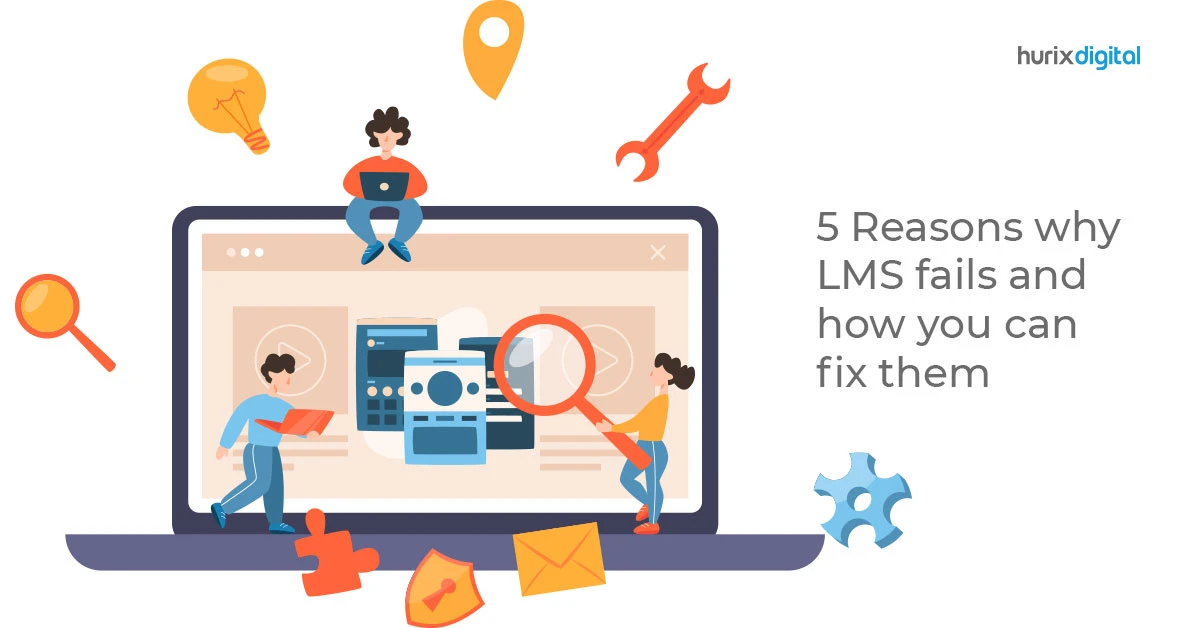
5 Reasons Why LMS Fails and How You Can Fix Them
Summarize with:
A report by Cisco predicts that global mobile data traffic will grow three times faster than desktop traffic from 2014 to 2019. A few years back, Gartner had predicted that by 2016, the use of mobile apps would “surpass that of Internet domain names, making mobile apps the dominant means of engaging with brands”. As of February 2019, mobile devices excluding tablets accounted for 49.73% of web page views worldwide.
These trends provide insights into how learners expect to interact with content, setting the stage for mobile-first training delivery to a global audience. Any eLearning content will have a limited shelf-life if it is not accessible on a mobile platform. So, if you are thinking of digitalizing your learning and training courses, consider thinking of a mobile-first LMS platform.
A well-organized training plan requires creating training modules, analyzing their effectiveness, and managing the training delivery across geographies. This is where the role of a learning management system (LMS) comes in. An LMS platform provides an organization with the perfect learning platform to manage, deliver, and track computer-based training and learning for employees, students, or customers. With the changing times, the LMS platform too has evolved from a desktop-based LMS to a mobile-first LMS that can deliver online training to your ever-busy workforce, globally, on their mobile devices.
Table of Contents:
- What is LMS?
- Role of LMS in Corporate Upskilling
- How can Enterprises Make Use of an LMS to Improve Training Outcomes?
- 5 Reasons Why LMS Fail?
- Signs that Tell You It’s Time to Upgrade Your Learning Management System
- Benefits of a Custom LMS for Employee Training
- Bottom Line
What is LMS?
An LMS or Learning Management System is a software program that enables students to access and receive course/learning content and other educational resources online to fulfill their educational needs.
Put simply, an LMS is a system that educational institutions and organizations can use to offer their remote online courses.
Apart from making it easy for students to learn from anywhere, anytime, the best LMS can also enroll new students, easily deliver e-learning courses, and efficiently manage the tests or assessments provided to the learners.
Role of LMS in Corporate Upskilling
Corporate upskilling is greatly aided by Learning Management Systems (LMS), which offer a centralized platform for training and development.
They track staff development, facilitate the creation of customized learning materials, and provide data to gauge performance.
Through interactive modules, LMS accommodates a variety of learning styles and helps enterprises swiftly adjust to changing skill requirements.
How can Enterprises Make Use of an LMS to Improve Training Outcomes?
An LMS is an excellent tool to improve the learning ability of any enterprise. There are several ways an enterprise can make use of a custom LMS for improving training outcomes, enabling complete training transformation.
Some of these are discussed below-
1. Centralized Repository for Training Records
For large enterprises with multiple divisions, an LMS offers the advantage of a centralized repository for training records. This not only allows them to keep track of employees across the organization but also helps managers/supervisors ensure the employees receive appropriate compliance training.
2. L&D Metrics and Analytics
Having an LMS provides businesses with L&D metrics and analytics so as to allow them to test the effectiveness of the current training program. And extract appropriate data to determine future training needs.
3. Comprehensive Learning
A custom LMS solution helps organizations curate various types of learning at one centralized place, making it easy for employees to find the content they need whenever required. Increasing access to mobile devices further helps L&D teams leverage custom LMS and offer a comprehensive and responsive learning program, making employee training much more effective.
5 Reasons Why LMS Fail?
Realizing the many benefits of a Learning Management System (LMS), companies worldwide are rapidly transitioning to this digital training facilitator. However, the growing adoption of LMS has brought the challenges of its successful implementation to the fore.
A Brandon Hall Group’s recent study finds that nearly half of the companies are dissatisfied with their current LMS, requiring a change to a new one.
So what went wrong? It would surprise you that LMS failures often have little to do with the software itself.
Below, we will look at five reasons why the implementation of LMS platforms fails and how you can fix them:
1. Not Having a Strategy in Place
Firstly, it is important to understand that LMS is a tool that can enhance and improve the way you train your staff. However, it is not a magical fix for all the training-related problems, such as the material you train them on.
So even if you have a feature-packed LMS platform, you would still need a training strategy to get the most out of it.
Solution: Develop an LMS strategy first
To build an effective LMS strategy, focus on the following aspects:
1. Identify Your Goals
What specific employee-training issues would you like the LMS to solve? For example, perhaps you want to increase employee engagement or reduce training costs. Identifying the goals can help you select the right platform that meets them.
2. Know Your Stakeholders
Consider concerns such as the tech literacy of the employee or the budget your senior leadership is willing to allocate for the learning and development department.
3. Make a Program Management Strategy
It includes allocating administrative resources, setting up course access, and measuring performance and ROI.
2. Choosing a Complicated LMS
While features are intended to improve LMS functionality, having too many of them can overwhelm the users and impact their user experience.
The 2020 Docebo study finds poor user experience as one of the top barriers to satisfaction with learning technology.
Remember that the purpose of LMS is to make it easy for trainers to complete and manage their training effectively. A cluttered and complicated LMS will do just the opposite. It will disengage users and, worse, isolate employees who aren’t tech-savvy.
Solution: Run a trial before purchasing a new LMS
Most LMS Vendors offer a trial or demo to help you evaluate how well the LMS works for your organization. Take advantage of the offer and get your employees’ feedback.
Make sure to pick an LMS that makes it easy for managers to track performance and is user-friendly and engaging for the employees.
3. Lack of End-User Support
Customer support or after-sales service is vital for the success of the LMS, especially at the initial stages.
Implementing an LMS or switching the LMS platform entails various processes such as data integration, course setup, learner enrollment, reporting requirements, etc. These functionalities take time to master; until then, administrators may have to rely on vendor support.
Even after a successful transition, you may require LMS maintenance and support services to make minor fixes or enhance your features. Or else your investment might go to waste.
Solution: Choose a vendor that provides after-sales support
Conduct prior research to ensure that the LMS you choose provides superior functionality to your administrators and end-users. For example, with such an LMS partner, you can implement and run online employee training programs even without a dedicated tech department.
4. Hidden or Recurring Costs
There is no doubt that employing LMS is a cost-effective method of employee training. By taking the training digitally, you can save on traveling and venue costs and do away with the need to hire multiple trainers or spend on printing material.
But before you purchase an LMS from the first vendor you meet, you must carefully conduct proper research. The upfront cost may seem attractive, but hidden charges, such as LMS maintenance or course development costs, may be higher than your expectations or budget.
Solution: Do proper cost research and analysis
Do not be swayed away by enticing offers from vendors. Instead, ask them scenario-based questions and try to probe around the possibilities of any hidden costs. Always study the terms and conditions behind their pricing plans.
Creating a realistic LMS budget and deciding on your ideal pricing structure before you start vetting vendors is essential.
For instance, should you go for pay-per-use pricing, or is a flat monthly fee more economical? Should you implement an LMS yourself or hire a provider? How much are you prepared to spend in case something comes uninvited?
It is always prudent to leave some leeway in your budget for unexpected expenses.
5. Poor Communication
This applies to communication on all fronts: with the vendor, implementation team, and end-users.
For many LMS buyers, vendor communication starts and ends with negotiating the payment terms. If you do not communicate your objective to the vendor, they will not be able to provide you with the best features.
Similarly, by not involving your team in the selection process and the implementation plan, you wreck your chances of successful LMS implementation.
Solution: Involve all stakeholders in discussions
Involve department heads in your selection plan, as they have the best idea of the learning objectives of their team. Then communicate the objective and expectations clearly to your vendor. Finally, inform all employees of the new LMS platform’s launch, scope, and requirements to prepare them for the rollout in advance.
Signs that Tell You It’s Time to Upgrade Your Learning Management System
There are several tell-tale signs that you can look out for that will make it clear that it’s time for your current learning management system to be upgraded. Recognizing these signs and being proactive will ensure that you are always on par or ahead of the ed tech curve.
1. Limited Functionality
A learning management system should include various features and functionalities that support your organization’s goals. However, the demand for new learning methods increases as technology advances.
In 2023, if your current LMS lacks personalized learning paths, gamification, or multimedia content, it may be time to upgrade to a more capable system.
2. Inadequate Performance
Slow-performing LMSs can be aggravating for both system administrators and end users. Slow load times, frequent crashes, and other technical issues can all contribute to a poor user experience, affecting the success of your training programs.
If your LMS cannot support many concurrent users or courses, consider upgrading to a more robust and stable system.
3. Inadequate Reporting and Analytics
A learning management system must be able to provide detailed reporting and analytics that can be used to make informed training program decisions.
However, suppose your current LMS does not offer the level of reporting and analytics required to track your learners’ progress, measure the success of your training programs, or identify areas for improvement. In that case, it may be time to upgrade to a system that does.
4. Limited Scalability
The number of users and courses in your organization will grow as it grows. As a result, slow load times, difficulty tracking progress, or a lack of reporting capabilities may occur if an LMS cannot handle increasing users and courses.
If you’re having these problems, it might be time to upgrade to a system that can scale to meet your needs.
5. Incompatibility with Modern Technology
The world of technology is constantly evolving rapidly, and an LMS must be able to integrate with modern technologies such as mobile devices, tablets, and web-conferencing systems.
If your current LMS is incompatible with these technologies, it may be time to upgrade to a system that is more capable of supporting them. For example, if your LMS does not support mobile devices, learners will struggle to access learning materials and track their progress while on the go.
6. Poor Customer Support
If a learning management system is a tool your organization relies on heavily, then having access to support and assistance when you need it is essential.
Suppose your current LMS solution needs adequate support and assistance. In that case, consider upgrading to a system that is better equipped to meet your needs and provide you with the help you require for your organization’s uninterrupted functioning.
Top LMS platforms include on-demand training, dedicated support teams, and 24-hour customer service to ensure that you always have help when you need it.
7. Limited Integration Capabilities
Top LMS platforms seamlessly integrate with other tools and systems used by most organizations and constantly upgrade their capabilities to do so with new and upcoming technologies.
If your current LMS cannot integrate with the latest tools, it may be time to upgrade to a system that can provide more robust integration capabilities.
For example, a learning management system that integrates seamlessly with your existing systems can help streamline processes, automate data transfer and simplify the user experience.
8. Limited Customization Options
A one-size-fits-all solution only sometimes works for some organizations. Instead, a learning management system should provide a wide range of customization options that can be used to tailor the system to your organization’s unique needs.
Customization, such as branding, white labeling, and custom themes, are a few basic options that top LMS platforms have.
If your current LMS cannot offer the customization options you need to adapt to the changes in technology and learning methodologies, it may be time to upgrade to one that can meet your organization’s current and future goals.
9. Inadequate Security
As more people register for online learning, learning management systems must keep up with the ever-evolving cybersecurity threats.
A breach in an LMS can lead to the loss of sensitive personal and financial user data, leading to irreversible reputational damage. As a result, top LMS platforms keep upgrading with the latest security measures needed to ensure that an organization’s intellectual property cannot be misused or distributed.
Benefits of a Custom LMS for Employee Training
LMS, as a robust training solution, helps in simplifying the entire process of training employees and tracking their progress and performance. There are several advantages to adopting a custom LMS for employee training programs.
1. Access to a Wide Variety of Training Types
LMS enables organizations to deliver training in various formats, including instructor-led training, eLearning classes, videos, documents, PowerPoint presentations, and more. It gives the advantage of offering vast options to the learners.
2. Low Investment and High Return
Implementing an employee training program requires quite a hefty investment. Switching to a custom LMS solution has many benefits for the organization due to the digital nature of the training curriculum, along with easy management options.
3. Easy Communication and Course Disbursement
An LMS allows the company to engage in easy and quicker communication channels with its employees. With features such as custom notifications to individual dashboards of the employees for easy course disbursement and flawless record-keeping of data, LMS has become a game-changer when it comes to employee training programs.
4. Live Performance Tracking
Another significant advantage of LMS implementation is the tracking of progress and performance. It allows organizations to easily check the progress of their employees as well as their performance. It helps the company to then allocate tasks accordingly based on the employee’s abilities.
Bottom Line
A capable LMS implementation strategy can be instrumental in training transformation and improved outcomes. Apart from giving you the option of creating customized learning experiences, relevant courses, multiple integrations, and insightful reports, an enterprise LMS also offers an easy and comprehensive way to manage the learning and development needs of your employees effectively.
All in all, an LMS is a one-stop solution for all enterprises to create, administer, and track employee training programs with far greater efficiency.
One of the best LMS you can look at is from Hurix Digital. The LMS solution by Hurix Digital can be conveniently leveraged through the e-learning platform to avail both traditional classroom training and blended learning models.
Get in touch with us today to learn more!
Summarize with:

Vice President & SBU Head –
Delivery at Hurix Technology, based in Mumbai. With extensive experience leading delivery and technology teams, he excels at scaling operations, optimizing workflows, and ensuring top-tier service quality. Ravi drives cross-functional collaboration to deliver robust digital learning solutions and client satisfaction