 A Space for Thoughtful

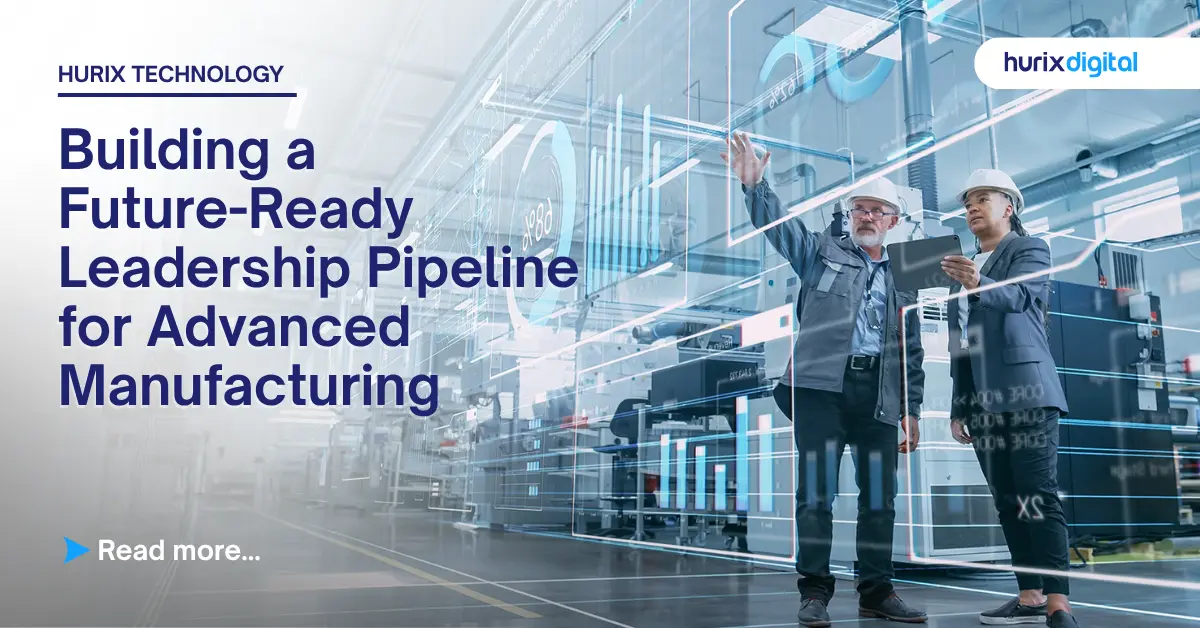
Building a Future-Ready Leadership Pipeline for Advanced Manufacturing
Summarize with:
Think about a factory floor the way a musician thinks about a stage. Machines are the instruments. The workers and leaders are the players. Without the right people in the right roles, the machines may run perfectly, but the performance is paltry. In the high-stakes world of product engineering solutions, leadership matters more than many realize.
For decision makers, strategists, and the people who make tough calls every day, the struggle to prepare tomorrow’s leaders is real. It affects how well a company adopts new tech, is cognizant of talent shortages, and strives to create meaningful collaboration across departments.
Let us talk about how to build a leadership pipeline that works. This blog will explain why building leadership readiness matters, how advanced manufacturing technology changes the landscape, and what concrete steps you can take.
Table of Contents:
- What Leadership Readiness Really Means
- Why the Old Way of Developing Leaders is Failing?
- What Human-in-the-Loop Automation Means for Modern Manufacturing Leaders?
- What a Blended Learning Model Looks Like in an Advanced Factory Setting?
- What Enterprise Leaders Are Struggling With
- How to Design a Pipeline That Actually Works?
- A Final Word
- Frequently Asked Questions
What Leadership Readiness Really Means
Before we talk about building a pipeline, let’s agree on what we mean by leadership readiness. Leadership requirements in advanced manufacturing are unique. Manufacturing leaders manage teams of operators, engineers, and data scientists. They call shots on highly technical tools, sensors, and automation platforms. And they balance safety, quality, and speed to impact customer outcomes.
Leadership readiness, therefore, includes strategic vision. Leaders need people skills to work with diverse teams that may have varying levels of experience and perspectives. The point here is that a pipeline that fills this kind of leadership role cannot be dictated solely by who is senior or who has been there longest. After all, the most effective product engineering solutions require leaders who can navigate both technical roadmaps and human dynamics.
Why the Old Way of Developing Leaders is Failing?
Many manufacturing companies still grow leaders the way they did twenty years ago. Someone spends a few years on the line. Then they become a team lead. Then a supervisor. Then a manager. Along the way, they might take a workshop or complete an online course. That path worked for a long time. It worked because the pace of change was slower. People learn by doing. They picked up intuition through experience.
Today, robust product engineering solutions involve Industry 4.0 systems that move quickly. There are industry 4.0 systems that generate vast amounts of data. Machines can adjust their own settings. Quality can be predicted before a product is finished. This is real and not theoretical. Leaders need an understanding of these things and experience applying them.
One of the biggest issues companies face is a talent shortage that affects both technical and leadership roles. Fewer workers are entering long-term paths that lead to leadership opportunities. Studies have shown that in many regions, older employees are retiring faster than younger employees are ready to take their place. This creates a gap that simple training videos or classroom sessions cannot close.
At the same time, automation means some entry-level tasks disappear. That sounds positive for productivity. It is positive. But it also means fewer opportunities for people to learn by doing. That natural training ground for future leaders shrinks. Companies have to replace it with something intentional.
What Human-in-the-Loop Automation Means for Modern Manufacturing Leaders?
Manufacturing is in a period of transition. Human-in-the-loop automation means machines carry out tasks independently, while humans remain part of the decision-making process. Machines produce data that must be interpreted. Machines make recommendations that must be validated. Humans still carry responsibility. This interplay is at the heart of modern product engineering solutions.
This changes the nature of leadership. Future leaders must be comfortable with data and data ethics. They must understand how automated systems connect with human tasks. They have to be able to teach others to work with machines, not against them.
This is why training management systems matter so much. They help track progress in both technical and human areas. These systems can combine simulation training with real case studies. They make sure learning does not happen in isolation or theory alone.
What a Blended Learning Model Looks Like in an Advanced Factory Setting?
Not every learning moment requires a classroom or a computer screen. Blended learning means mixing formats and contexts. It includes traditional instruction, project-based work, simulations, and coaching.
Blended learning has a side benefit. It brings teams together across functions. Engineers, operators, and managers learn beside each other. This shared language strengthens collaboration, which is vital when managing complex product engineering solutions.
What Enterprise Leaders Are Struggling With
If you speak with senior leaders in large organizations, you can sense recurring frustrations. Some leaders worry there is no plan for who will manage the next generation of complex machines. Others see talented employees leave because they lack clear paths to growth. Many describe training investments that feel like check boxes rather than capabilities that affect performance.
There’s one other component people miss. Leadership requirements evolve. The great leader from 10 years ago may not have the skillset for the future. Strategy, people, and technology have merged. This is why companies must align leadership development with business outcomes. If the goal is to expand automation and quality simultaneously, the pipeline must produce leaders who can manage both.
How to Design a Pipeline That Actually Works?
There is no perfect template for every organization. But there is a pattern that successful companies follow. One step is to define what leadership looks like for your company. Not generic shop floor leadership definitions. Specific behaviors, skills, and mindsets that match your production model and culture.
The next step is to build blended learning paths that strengthen people across a range of skills. This includes training on technology, leadership judgment, collaboration, and emotional intelligence.
Measurement and feedback cannot be missing from the pipeline. Leaders have to know how they are progressing. Their managers need insight into where support is required. Measurement also helps companies correct ineffective training practices.
A Final Word
If you are making decisions about leadership pipelines, you face hard choices. You cannot ignore talent shortage issues and expect performance to hold. You cannot invest in technology without preparing people to maximize its value. This matters to enterprise-level leaders because the cost of failure is high. Misaligned leadership can slow production gains, create employee frustration, and harm customer satisfaction.
At Hurix Digital, we help organizations with the parts of leadership readiness that often get overlooked. We support workforce training, training management systems, blended learning design, and content that prepares people for real work situations.
We focus on content and experiences that align with business challenges. Our work helps leaders gain practical skills and confidence. We do not offer generic programs. We help you design tools and pathways that fit your context.
Reach out and schedule a call with a content transformation expert. We can help you explore content services that support simulation training, leadership readiness, and long-term talent development.
Frequently Asked Questions(FAQs)
Q1:Why is a traditional leadership pipeline no longer sufficient for advanced manufacturing?
Traditional pipelines often rely on “tenure-based” promotion, where line experience is the primary qualification. In modern manufacturing, the rapid integration of product engineering solutions and Industry 4.0 data requires leaders who possess both technical literacy and the ability to manage complex, automated workflows that didn’t exist a decade ago.
Q2:How does “human-in-the-loop” automation change the role of a shop floor manager?
It shifts the manager from a task overseer to a data validator. Instead of just monitoring output, leaders must now interpret machine-generated insights, ensure ethical data usage, and bridge the gap between automated precision and human intuition to maintain high-quality standards.
Q3:What are the key components of a “blended learning” model for future leaders?
A successful model moves beyond the classroom. It typically includes a mix of digital simulations (to practice high-stakes decision-making safely), project-based assignments (to solve real-world production bottlenecks), and cross-functional coaching where engineers and operators learn from one another.
Q4: How can companies address the talent shortage in leadership roles?
The most effective strategy is to build an intentional, internal pipeline rather than relying solely on external hiring. By implementing training management systems that identify high-potential employees early and providing clear, technology-focused growth paths, companies can close the “experience gap” before older workers retire.
Q5:How do you measure the success of a leadership readiness program?
Success isn’t just about completion rates; it’s about business outcomes. Effective measurement looks at KPIs such as reductions in downtime, the speed of new technology adoption, employee retention rates, and the team’s ability to meet production targets using new product engineering solutions.
Summarize with:

Vice President & SBU Head –
Delivery at Hurix Technology, based in Mumbai. With extensive experience leading delivery and technology teams, he excels at scaling operations, optimizing workflows, and ensuring top-tier service quality. Ravi drives cross-functional collaboration to deliver robust digital learning solutions and client satisfaction