 A Space for Thoughtful
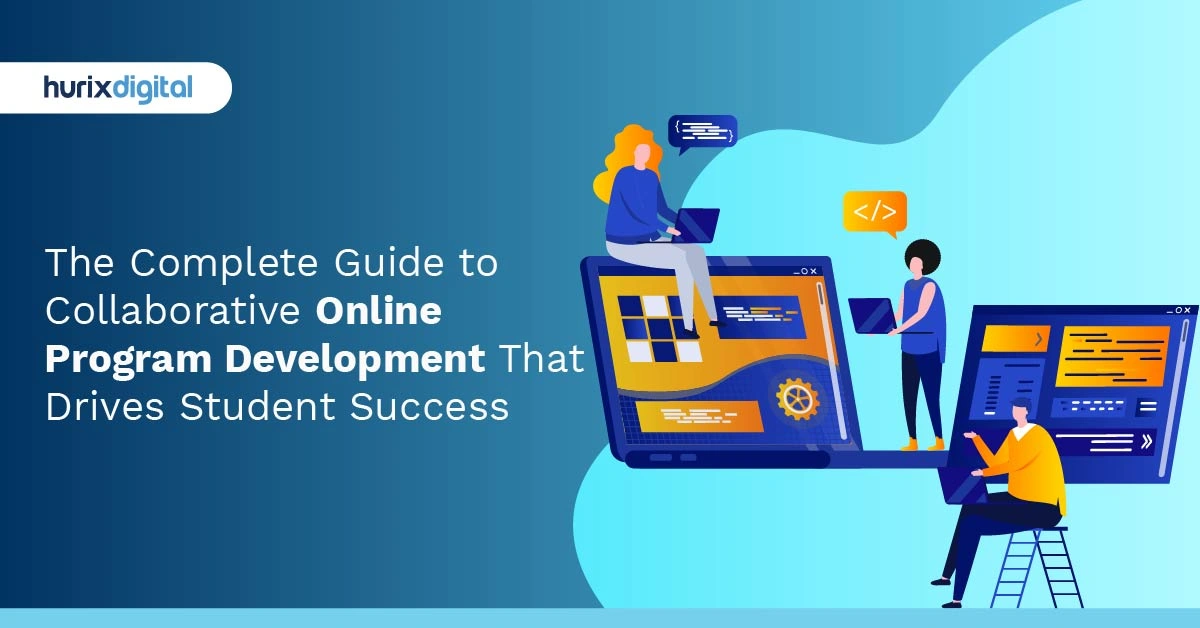
The Complete Guide to Collaborative Online Program Development That Drives Student Success
Summarize with:
The landscape of education is continuously evolving, driven by technological advancements and shifting pedagogical philosophies. As a result, online learning courses have surged in relevance, moving from a supplementary tool to a primary mode of instruction for many institutions worldwide. This transition has pushed educational organizations to move beyond traditional, one-dimensional learning models and embrace the innovative potential of digital programs. However, creating effective and engaging online courses is a significant undertaking. To meet this demand, a powerful solution has emerged: collaborative online program development.
This guide will explore the intricacies of collaborative online program development. We will delve into what it means, the challenges it solves, and the best practices for implementation. Furthermore, we will examine different learning models, such as engaged, collaborative, and transformative learning, and how they contribute to creating impactful educational experiences. By the end, you will have a comprehensive understanding of how to leverage collaboration to build high-quality, student-centric online programs that are ready for the future.
Table of Contents:
- The Modern Challenge of Online Course Design
- What is Collaborative Online Program Development?
- Understanding Key Learning Models
- Best Practices for Developing Collaborative Online Programs
- The Benefits of Industry-Academia Collaboration in Education
- Strategies for Forging Effective Industry-Academia Partnerships
- The Future of Collaborative Online Program Development
The Modern Challenge of Online Course Design
Digital programs offer immense potential to streamline learning, improve knowledge retention, and provide contextual understanding. Yet, designing a superior online learning course is far from simple. An effective digital course requires a methodical design, a focused approach, comprehensive content, and an interactive foundation. All of these elements must be balanced against practical constraints like resource efficiency, time management, curriculum integration, and cost-effectiveness.
To navigate these complexities, educational institutions, from K-12 schools to universities, are turning to an innovative solution that allows them to develop credible digital courses efficiently. This solution is widely known as collaborative online program development. It provides a structured framework for creating high-quality learning experiences by pooling expertise and resources.
What is Collaborative Online Program Development?
Collaborative online program development is a process where faculty members from various backgrounds, streams, and disciplines come together to design a foundational course shell. This shell serves as a template for delivering knowledge in a direct, coordinated, and student-centric manner. Instead of working in isolated silos, faculty members engage in distributed collaboration. This approach ensures that every aspect of a digital course is carefully considered, meticulously researched, and diligently designed.
There are numerous benefits associated with this collaborative model, including:
- Ensuring Consistency and Quality: It standardizes the quality and content across different sections of a course.
- Optimizing Faculty Time: It saves individual faculty time on course creation, reallocating it toward online teaching and student interaction.
- Creating High-Quality Courses: The process results in superior digital courses enriched with expert inputs from multiple specialists.
- Maximizing Resources: It makes better use of an institution’s human, intellectual, and financial resources.
- Enabling Iterative Improvement: The collaborative structure allows for easier course modification based on student reviews and feedback.
- Facilitating Integrated Learning: It allows for extensive, personalized, and integrated curriculum coverage.
- Promoting Cohesion: The model fosters inter-departmental cohesion while promoting deep content learning.
Despite these advantages, designing an online course is incomplete without adhering to a set of uniform, standardized practices that have gained international acceptance. Understanding these practices is crucial for successful implementation.
Understanding Key Learning Models
To build truly effective collaborative programs, it’s essential to understand the pedagogical theories that underpin modern learning. Rather than being passive receivers of information, today’s learners must become analytical thinkers, creative collaborators, and agile problem-solvers—skills highly sought after in the workplace. Course designers can foster these skills by integrating active and interactive elements that promote engaged, collaborative, and transformative learning experiences.
What is Engaged Learning?
Engaged learning is an active process where knowledge is acquired through participation, inquiry, and direct experience. The Info-Sci Dictionary provides a comprehensive definition of engaged learning, emphasizing sustained interactions, critical analysis, and purposeful discourse. In this model, students are active participants, working individually and in groups to develop critical thinking skills by tackling real-world problems.
What is Collaborative Learning?
Collaborative learning flattens the traditional hierarchy between instructors and learners, positioning both peers and teachers as valuable resources. Geoffrey Caine, in the Handbook of Research on Student-Centered Strategies in Online Adult Learning Environments, notes that learning rarely occurs effectively in isolation. This model views knowledge not as something transferred from a teacher, but as something co-created by a community of learners who bring their unique experiences and perspectives.
Collaborative learning is inquiry-based, with a group seeking to construct meaning around a central question. As Joyce W. Gikandi suggests in Computer-Supported Collaborative Learning and Assessment, social interactivity is pivotal for meaningful online learning. She advocates for learning communities, or “formal groups with a common educational purpose where members are constantly learning new skills and working to discover and propagate knowledge.” This connection helps learners adapt and respond with agility in our rapidly changing world. You can find more on this in our article on creating a collaborative learning environment at the workplace.
What is Transformative Learning?
Transformative learning, a concept from researcher Jack Mezirow, is a constructivist approach where learning is defined as meaning-making. It occurs when new information challenges an adult learner’s established beliefs and perspectives. According to Mezirow’s Transformative Learning: Theory to Practice, this process “develops autonomous thinking” by helping learners replace self-limiting beliefs.
Mezirow outlines ten phases of transformative learning, starting with a “disorienting dilemma” and progressing through self-examination, critical assessment, exploration, and finally, reintegration of a new perspective. These phases have been simplified into models like Norma Nerstrom’s four-segment framework: having experiences, making assumptions, challenging perspectives, and experiencing transformative learning. Ultimately, the process involves a catalyst for change, a period of reflection, and action toward a new solution. If the goal is to prepare students for long-term success, your online course development must create these transformative experiences.
Best Practices for Developing Collaborative Online Programs
When collaborating on online program development, it is essential to follow a detailed, step-by-step approach. This approach should aim to facilitate understanding, promote engagement, enhance knowledge, and assess performance, particularly in the higher education sector. The paradigm of collaborative program design should primarily focus on the following five practices.
1. Pool Instructional Expertise
First and foremost, bring together faculty members with diverse subject matter expertise. Once assembled, clearly communicate the course objectives and walk them through the curriculum you intend to cover. The next step is to assign them the task of designing a shared template that caters to their designated sections, ensuring that their collective knowledge is integrated from the start.
2. Incorporate Student Inputs
As soon as the curricular fundamentals are sorted out, begin seeking specific input from students on how they want the course to be designed. An effective online program should use a mix of visual, textual, and other multimedia elements. By doing so, you can ensure that student-centric preferences are incorporated, which helps foster excitement and genuine interest in the discipline.
3. Structure Content Logically
Based on faculty expertise and student input, begin crafting the course outline with both technical and clinical precision. You must ascertain that each section of the course, though designed by different faculty members, complements the others and integrates seamlessly into the overall syllabus. Strive to maintain a consistent structure, uniformity, and tone throughout the entire course content.
4. Establish Instant Feedback Loops
A significant advantage of collaborative online course development is the ability to obtain quick reviews and instant feedback. While an in-depth analysis by a group of faculty members can sometimes be a slow process, the feedback mechanisms built into modern digital programs permit swift grievance redressal and course correction. This agility is crucial for continuous improvement.
5. Ensure Quick Resolution of Issues
Finally, a collaborative course design effort provides an exclusive opportunity to resolve quality concerns as quickly as possible. Important issues like course ownership, support training, development compensation, and program maintenance can be comfortably ironed out. This allows educational institutions to focus their energy solely on the primary goal: knowledge transfer.
By following this shared and coordinated strategy, both students and faculty can experience tremendous reflective, instructional, and pedagogic benefits. These practices elevate content quality, enable the delivery of personalized modules, and ensure equitable access across all boundaries.
The Benefits of Industry-Academia Collaboration in Education
Beyond internal collaboration, partnerships between higher education and industry are a powerful accelerator for innovation, skill development, and societal growth. Companies that collaborate with universities gain access to cutting-edge research and a pool of qualified candidates, keeping them at the forefront of their fields.
1. Cultivating Industry-Ready Graduates
Business partnerships provide students with invaluable opportunities for internships, co-op placements, and real-world projects. These experiences take learners beyond academic theory and immerse them in practical job situations. As a result, they develop critical industry-specific skills and enhance their competencies in a hands-on setting. This focus on a well-rounded skill set makes them more adaptable in a variety of industry contexts.
2. Aligning Skills with Industry Needs
Another significant benefit of an academic-industry partnership is its ability to bridge the gap between academic knowledge and real-world application. By working closely with industry partners, universities can ensure their courses are current and directly address the workforce’s evolving demands. This alignment produces graduates with skills that are immediately valuable to employers, enhancing their employability. This proactive approach is even more critical given trends like job automation and the increasing demand for specialized skills. The impact of technologies like AI on higher education further underscores this need.
3. Enabling Groundbreaking Innovation
The synergy fostered by these partnerships is a hallmark benefit for research and development (R&D). Joint research projects combine the intellectual capital of academia with the practical experience of industry. This interdisciplinary approach leads to new products, technologies, and processes that would be unlikely to emerge from either sector operating alone. These collaborations often involve shared ownership of intellectual property, dividing the financial costs and rewards of R&D and ensuring mutual commitment.
4. Accessing Cutting-Edge Resources
Universities are hubs of R&D with significant intellectual capital and state-of-the-art facilities. Collaboration gives companies unparalleled access to this innovation ecosystem, potentially shortening their own R&D timelines. Moreover, smaller firms can leverage specialized university equipment and technology that would be too expensive to maintain independently, speeding up their development process.
5. Building a Robust Talent Pipeline
By actively collaborating with educational institutions through guest lectures and internship programs, businesses can help shape the future workforce. This circular process is mutually beneficial. Institutions can adapt their curricula to meet industry demands, and businesses gain a pool of highly skilled graduates ready to contribute from day one. This fosters a continuous cycle of learning and progress, creating a trained and flexible workforce for the future.
Strategies for Forging Effective Industry-Academia Partnerships
Enhancing education through strategic partnerships requires a meticulous approach. Establishing collaborations that yield mutual benefits and fuel innovation in higher education demands careful planning.
The foundation of any successful partnership is selecting the right academic institution. Key factors to consider include:
- Research Alignment: Seek universities with research programs that align with your company’s strategic interests.
- Reputation and Expertise: Evaluate the institution’s academic standing and the demonstrated expertise of its faculty in your area.
- Willingness to Engage: Partner with institutions that are proactive and flexible in their approach to industry collaborations.
Inclusive education, which emphasizes equal opportunities for all learners, can further enrich this collaborative environment. Once a suitable partner is identified, you can initiate engagement through industry networking events, direct outreach, or existing connections.
The Future of Collaborative Online Program Development
As we look toward 2026 and beyond, multi-faculty, collaborative online program development will become the new standard. The education sector, with its growing technological prowess, will use these collaborations to channel faculty expertise, deliver professional curricula, and create immersive courses. Dynamic, downloadable, and shareable programs will empower institutions to progress without straining their resources.
The digital e-learning market continues to expand, signaling that the role of online programs will undergo a massive transformation. Using collaboration to alter the content and quality of these programs will help them become the primary medium for enhancing excellence, developing accountability, and providing opportunity. Businesses provide a crucial bridge, translating academic research into practical applications. In parallel, universities serve as the wellspring of groundbreaking ideas and the training ground for future industry leaders. This combined force propels both technological advancements and professional development.
Successful collaborations serve as blueprints for the future, with each partnership learning from the last. Looking ahead, the integration of industry and academic efforts holds immense promise as a cornerstone of continued innovation. You can learn more about this in our Hurix Minibook: Immersive Learning for the WIN in Education!.
At Hurix Digital, we understand the transformative potential of these partnerships. Our expertise in collaborative course development has led renowned institutions to select us as their preferred partner in online course creation. We have developed a series of courses for a leading provider of instructional solutions, enabling authors globally to work together on a single platform. You can click here to read more about our work.
Want to learn more about how we can build online programs collaboratively? Contact us now!
Summarize with:

Senior Vice President
A Business Development professional with >20 years of experience with strong capability to sell new solutions and develop new markets from scratch. New Market Entry Specialist with experience working in the largest emerging markets. Exceptional experience in conceptualizing, ideating and selling new learning technologies like VR AR, etc. across multiple industry verticals.