 A Space for Thoughtful

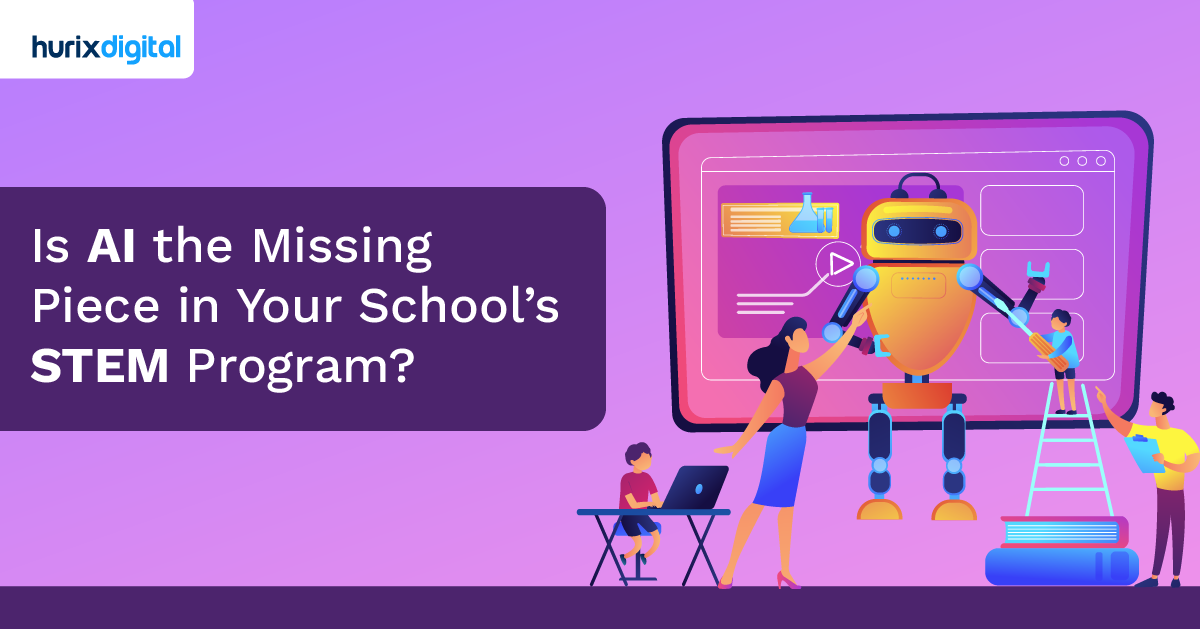
Is AI the Missing Piece in Your School’s STEM Program?
Summarize with:
Educators across the globe are pivoting to meet the needs of their students. The advent of new technology is fundamental to this initiative, but it simply cannot be achieved alone. We’re on the cusp of a generational shift that will impact fields across academic disciplines and workplaces for years to come.
AI-related technologies have surpassed expectations by penetrating human society faster than any other technology in history. Since 2020, AI has created over 97 million new jobs globally.
To truly optimize your education system, it is more imperative than ever to include AI in STEM learning (Science, Technology, Engineering, and Mathematics) curriculum.
Table of Contents:
- The Rise and Influence of AI in STEM Learning
- Roadmap to Integrate Artificial Intelligence in the Curriculum
- Why Does Blended Learning Work for STEM Education?
- Illustrative Examples of Blended Learning in Action
- Building a Blended Learning Ecosystem for STEM Success
- What are the Four Tips to Employ AI in Education?
- What are the Benefits of AI in STEM Education?
- What are Digital STEM Activities?
- Ethical Considerations of AI in STEM Education and Their Solutions
- Summing Up
The Rise and Influence of AI in STEM Learning
Did you know that the demand for skilled STEM professionals is rising? In the USA alone, by 2025, there could be a whopping 3.5 million jobs up for grabs! However, a talent gap may leave up to 2 million of these positions unfilled.
That’s where AI in STEM learning steps up as a game-changer. Traditional classrooms are no longer the sole avenue for education. AI-powered blended learning is the new frontier, offering accessibility and flexibility.
It allows students to access educational resources and engage in immersive learning experiences. They can step into virtual learning environments that transcend the limitations of physical spaces.
Roadmap to Integrate Artificial Intelligence in the Curriculum
Artificial intelligence (AI) is a powerful tool that can enhance education in the setting. Learn about AI’s benefits in STEM learning.
The first step is to understand the scope of AI. Integrating AI into education aims to provide students with an understanding of how technology works so they can use it effectively in the real world.
It’s also important that teachers understand that computers are not intelligent by themselves; they are only as smart as their human operators allow them to be. The following steps will help you integrate AI into curriculum development:
1. Curate a Learning Technology Plan
It will help you identify what technology tools you currently have access to in your school and which ones you want to incorporate into your curriculum. It also helps you determine how much funding you’ll need to make this happen.
This plan should outline which AI tools will be used in each grade level and how they’ll be integrated into different subjects like math, science, and language arts. Hence, AI for schools is of the essence.
2. Systematically Create Curriculum Units and Lessons with AI
Next, create units and lessons that incorporate artificial intelligence into core subjects like math and science. This means creating units that help students learn about robotics or autonomous vehicles.
For example, if you’re planning on using an intelligent chatbot to teach chemistry lessons, you’ll need to outline exactly how it will work with students during each phase of the unit.
Also, make sure that these units align with standards laid out by state departments of education.
3. Train Teachers on How to Use AI to Teach Students
Identify your core competencies as a teacher or school leader.
For example, if you want to use AI to train students on science topics like biology or chemistry, then select a core competency such as biology or chemistry as one of your main categories. You can also combine multiple competencies so that they form an overarching theme, such as STEM (science, technology, engineering, and math).
Next, training will be provided through workshops, guest presentations, or in-class tutorials. Additionally, many schools are now offering courses in machine learning and deep learning that teachers and students can take.
4. Measure the Impact of Your AI-Enhanced Curriculum
You can do this by conducting surveys and interviews with teachers, students, and parents before and after they use an AI system. You should also perform academic testing (such as standardized tests) before and after implementing an AI system so that you can see if there are any improvements in student performance due to its use.
For example, if a teacher wants to know how well their class did on an assignment, they could use AI to analyze their data and identify which students need extra help or which concepts need more emphasis during class time.
Why Does Blended Learning Work for STEM Education?
Blended learning combines the strengths of traditional classroom instruction with the flexibility and personalization of online learning. Students engage in face-to-face interactions with teachers while also exploring concepts and applying skills through online activities, simulations, and projects.
This dynamic approach caters to diverse learning styles and paces, fostering deeper understanding and a more active learning environment.
Here’s why it works for STEM education:
1. Real-World Problem-Solving
Blended learning facilitates project-based learning, where students tackle authentic challenges that connect STEM concepts to real-world applications. This could involve designing earthquake-resistant structures, building solar-powered cars, or analyzing local environmental data.
After conducting a meta-analysis of 66 empirical research papers, researchers found that the project-based learning intervention is known to improve students’ learning outcomes and has a profound impact on engineering and technology disciplines.
2. Active Learning and Collaboration
Online platforms provide opportunities for individual exploration and practice, while classroom sessions allow for collaboration, discussion, and teacher guidance. This combination promotes critical thinking, communication, and teamwork – crucial skills for future STEM professionals.
It has also been found that a combination of digital technology and collaborative tools in a blended learning environment acts as a facilitator, mediator, and results-oriented framework.
3. Personalized Learning
Blended learning allows for differentiated instruction, tailoring the learning experience to individual student needs and learning styles.
Online resources and solutions can offer adaptive learning paths, remedial activities, and additional challenges, ensuring each student progresses at their own pace. Below is an image characterization of the evolution of educational technology chronology:
4. Engaging Technology
Blended learning leverages the power of technology to engage students and make learning more interactive. Virtual labs, simulations, and immersive experiences bring STEM concepts to life, fostering curiosity and a desire to explore further.
The STEM (Science, Technology, Engineering, and Mathematics) approach with blended learning has one major advantage- an intriguing learning strategy to teach children how to reason logically before having them solve actual-world problems and master technology.
Illustrative Examples of Blended Learning in Action
Here are some examples of how blended learning can engage students in real-world problem-solving:
1. Engineering Earthquake-Proof Structures
Imagine students collaborating in a virtual lab, testing different building materials and designs using simulations of earthquake tremors. They can then build and test miniature structures in the classroom, comparing their virtual models with real-world results.
This project not only teaches them engineering principles but also fosters critical thinking, teamwork, and communication skills as they analyze data, discuss solutions, and present their findings.
2. Building a Sustainable Future
Blended learning can empower students to become environmental stewards. Online platforms can offer access to real-time data on local air and water quality, while offline activities involve field trips to collect samples, analyze the data, and design solutions for environmental challenges.
Students could create awareness campaigns, propose policy changes, or even develop sustainable energy solutions, all while putting their scientific knowledge into practical use.
3. Combating Food Insecurity
Food security is a global issue, and blended learning can equip students with the tools to address it.
Through virtual simulations, students can explore different agricultural practices and the impact of climate change on food production. In the classroom, they can conduct experiments on plant growth, design hydroponic gardens, or even develop mobile apps to connect local farmers with consumers, learning valuable lessons about agriculture, technology, and social responsibility.
4. Preserving Cultural Heritage
From analyzing historical artifacts using 3D scanning technology to designing virtual tours of ancient landmarks, blended learning allows students to delve into the past and connect it with the present.
They can research historical figures and events, translate ancient texts, or even develop educational games to share their learnings with others, using technology to bridge the gap between the past and the future.
Building a Blended Learning Ecosystem for STEM Success
Implementing successful blended learning for STEM education requires careful planning and consideration in the following areas:
- Teacher Training: Teachers need to be equipped with the skills and knowledge to design and implement blended learning experiences effectively. Ongoing support through collaboration, mentoring, and peer observation can further enhance their confidence and efficacy.
- Technology Infrastructure: Reliable internet access, appropriate devices, and user-friendly online platforms are essential for success. Schools must invest in robust internet connectivity, appropriate devices for students and teachers, and user-friendly software platforms.
- Curriculum Alignment: Blended learning activities should be aligned with curriculum standards and learning objectives to ensure effective integration of online and offline components. Concepts introduced online can be solidified through hands-on activities in the classroom, while classroom discussions can spark deeper exploration through online resources.
- Assessment and Feedback: Develop effective assessment strategies that measure both knowledge and skills acquired through blended learning activities. Providing timely and constructive feedback is crucial for student growth and engagement, and utilizing blended learning platforms with built-in assessment tools can streamline this process.
- Content Quality and Variety: Blended learning thrives on engaging and diverse content. Online resources should be interactive, age-appropriate, and aligned with curriculum goals. Utilizing simulations, interactive games, immersive experiences, and authentic data sets can spark curiosity and keep students motivated.
What are the Four Tips to Employ AI in Education?
AI can be used to teach students how to think like scientists or researchers, solve problems creatively, and design solutions that will be useful in the real world.
It also helps them develop critical thinking and problem-solving abilities, which are essential for success in life after graduation.
Here are a few handy tips for educators and learners to speed up the integration process of AI-powered STEM learning:
For Learners
- Challenge: Dive into the world of AI through interactive activities and quizzes
- Mission: Build mini-robots or program a virtual creature to navigate a maze
- Outcome: Uncover the secrets of machine learning by analyzing data patterns in interactive games
- Coding Camp: Craft a helpful AI bot that answers questions, schedules tasks or assignments
- Algorithm Arena: Design a competitive AI game where players program their strategies to conquer opponents
- Level Up: Learn game development techniques and incorporate AI elements into your interactive creations
For Educators
- Behind the Scenes: Explore the mechanics of AI in popular video games and analyze how algorithms govern movement, decision-making, and enemy behavior
- Grading Games: Utilize machine learning tools to automate test scoring, freeing up time for personalized feedback and deeper learning discussions
- Algo Architects: Master the art of algorithm design and build custom solutions for real-world problems your students care about
- AI Playground: Craft a collaborative classroom environment where students interact with AI-powered tools, assistants, and even adaptive learning platforms
- Storytelling with AI: Design a choose-your-own-adventure story where AI helps personalize the narrative based on students’ choices and preferences
- Future Vision: Imagine and prototype educational tools and experiences that seamlessly integrate AI to enhance learning, engagement, and personalized growth
What are the Benefits of AI in STEM Education?
The integration of AI offers diverse benefits that cater to the unique needs of students. Here are some ways AI can enrich remote education:
1. Personalized Learning Experiences
AI tailors educational content to a student’s unique needs, learning pace, and style. It breaks down complex STEM content into bite-sized, self-contained lessons.
This personalization is necessary to understand complex concepts and retain them. Here’s how AI helps in this process:
- AI adapts to students’ learning styles, whether they’re visual learners or prefer hands-on tasks. This tactic helps them understand and absorb learning materials in a practical way.
- It transforms complex topics in science and mathematics into a series of engaging scenarios, enabling instructors and students to tackle one concept at a time.
2. Enhanced Student Engagement
Learning through AI is dynamic, with games, robotics, and smart solutions that turn education into an adventure.
- AI-driven gamification elements make learning fun and interactive. It encourages students to participate actively in STEM subjects.
- Features like leaderboards, rewards, and interactive challenges can captivate students’ interest and foster a deeper engagement.
3. Access to Advanced Learning Resources
Intelligent tutoring systems use AI to provide individual guidance and feedback to students. They ensure that students receive support precisely when they need it.
Here’s how AI-powered solutions can optimize learning outcomes and promote academic success:
- Assess students’ knowledge gaps, identify misconceptions, and offer remedial instruction.
- Supplements the virtual classroom with resources tailored to individual student needs.
- Provides instant explanations or on-demand help, fostering independent learning and mastering STEM topics.
4. Real-World Application and Simulation
AI brings immersive and interactive learning experiences through virtual simulations, augmented reality (AR), and virtual reality (VR).
These technologies allow students to explore complex scientific concepts. Here’s how:
- AI-powered virtual labs offer the opportunity to conduct experiments in a risk-free, immersive setting. For example, a biology student can dissect a virtual frog, or an astronomy student can navigate the galaxies.
- Students can manipulate variables, observe outcomes, and gain practical insights. This experimentation helps to foster a deeper understanding of scientific principles.
5. Adaptive Assessment and Feedback
With high accuracy rates in inspection and grading, AI minimizes the chances of human error. These practices make evaluations fair, precise, and insightful. Here’s how:
- Provides individualized feedback and targeted interventions to address specific learning needs.
- Automates the grading of objective assessments, freeing educators from routine tasks.
- Uses natural language processing (NLP) to assess open-ended responses and essays.
- Identifies instances of plagiarism, ensuring academic integrity and originality.
6. Cultivation of Critical Thinking and Problem-Solving Skills
STEM education is more than simulating experiments. It also nurtures curiosity, innovation, and critical thinking.
AI paves the way for students to explore the unknown, pushing the boundaries of innovation. Here’s how:
- AI algorithms introduce interactive scenarios that demand logical reasoning, creativity, and collaboration.
- It encourages students to approach challenges from diverse perspectives.
This helps develop problem-solving skills, resilience, and the ability to learn from failures.
7. Data-Driven Insights
AI generates valuable insights that empower you to make informed decisions and optimize online teaching resources:
- Provides actionable data on student engagement, performance trends, and areas for improvement.
- It helps you identify patterns and trends in student learning behaviors and optimize your curriculum.
8. Preparation for Future Careers
Blending AI into STEM education can help students adapt to the evolving demands of the global workforce.
It will prepare them for exciting paths in data science, AI, and advanced STEM applications. Here’s how:
- Hands-on experience with AI-driven tools can give them a competitive edge.
- Edtech solutions can provide students with guidance on in-demand skills and job pathways.
What are Digital STEM Activities?
Digital STEM activities simply refer to incorporating STEM or science, technology, engineering, design, and math into the curriculum and classrooms to promote creativity, inspiration, and critical thinking in students, along with other benefits of STEM learning. The best part is that these activities can be implemented either in a whole-group setting or as an individual STEM station or center.
Here are some of the must-have online STEM activities in any curriculum.
1. STEM-based Quick Build Challenge
A STEM-based quick-build challenge is a good way to engage students during a live virtual class. An educator needs to select a building task that can be done with a range of simple materials available at home. Students can then participate in the activity in an online classroom setting.
For this digital STEM activity, ask your students to gather all the available material, which can include straws, papers, paper plates/ cups, Legos, newspapers, tape, etc.
Once done, prompt your students to come up with an initial design before building. Here, the aim is to make them brainstorm and discuss ideas that focus more on problem-solving, creativity, and perseverance during the building phase. The time element is an added attraction to this fun STEM activity.
2. Estimating Volumes STEM Activity
This is a simple measurement and math activity that is an exciting way to introduce the concept of volume to students. The other advantage of this activity is that it also includes excellent fine motor skills practice for students.
The activity requires everyday items such as plastic measuring containers, a pitcher of water, a funnel, a tray, paper towels, and containers in different shapes and sizes. Students can also try this activity with several other materials, including shells, gems, blocks, and rocks.
The activity allows students to learn the concept of volume which is the space a substance/object takes up or that can be enclosed in a closed container. It is also a great way to get students thinking, problem-solving, exploring, and observing what is happening around them.
3. STEM-based Coding Communication Challenge
If you have been looking for an activity to promote communication and collaboration among your students, this is an ideal STEM-based coding activity through virtual platforms.
The activity requires one student to direct the other in building a specific object. It can be done with building materials like Legos, index cards, paper modeling clay, or any other material easily available.
To implement the activity, teachers can either conduct live class sessions where students offer commands and attempt to build the tool, or students simply post a video with commands on how to build the tool. Their peers then respond by posting a video of their tool using the instructions given.
4. Virtual Field Trips STEM Activity
For students, field trips are immensely important as they can enhance a lesson plan for almost any subject. However, some of the biggest field trips aren’t available to many students. Most educators would agree that, in such a scenario, there’s also plenty to learn from implementing fun and informational virtual field trips.
These virtual field trips bring two key benefits to students over in-person visits- zero cost and no crowds, along with offering an interactive & immersive experience to the students.
For instance, to learn the concept of space and the solar system, students can take a virtual field trip through space, where different stars and planets can be conveniently labeled, and they can closely observe several planets and stars up close using the solar system scope. Various view selections can allow students to see the solar system in different (planetary and panoramic) views.
5. Mathematical Operations Concept Using Real-life Example
This is a simple movement-oriented math STEM activity that can be done with everyday items such as a sheet of paper taped to the wall, a few sticky notes, and a marker. It helps kids thoroughly understand the mathematical operators and the meaning of numeric values.
Similarly, for students just learning to count, understanding the concept that numbers increase in size can be quite confusing. However, with things such as pipe cleaners and beads, you can help students learn to count while also allowing them a simple visual of how numbers increase in size.
All you need to do is take small pieces of paper and label each of the pipe cleaners with a number. Students then have to simply arrange the pipe cleaners from small to big and start putting on the correct number of beads while counting aloud at the same time.
6. STEM-based Creating Model- Working Lungs
In this activity, students will explore the inhalation/exhalation process that happens in the lungs during respiration. The activity can be done using everyday materials, and every student team will be required to create a model pair of lungs.
The objective of this activity is to allow them to describe the function of the respiratory system, create a model of the lungs, and explain what happens to them when they inhale and exhale.
Ethical Considerations of AI in STEM Education and Their Solutions
As you immerse yourself in the virtual learning environments, navigating the ethical landscape of AI in EdTech solutions is crucial. Here are the touchstones you should be aware of:
1. Data Privacy and Protection
The student and educator’s digital footprint in online education is vast. But as AI systems become more intelligent, they may overstep into privacy.
Key Solutions:
- Ensure robust data protection measures to safeguard your sensitive information.
- Use techniques to de-identify and anonymize personal data where possible.
- Enforce advanced encryption methods to secure data both in transit and at rest.
- Define clear policies for who can access student data and for what purpose.
- Promote digital literacy and responsible use of technology.
2. Bias and Fairness
The AI facilitating your learning should be a beacon of impartiality. However, it can sometimes perpetuate biases, affecting learners and teachers alike.
Key Solutions:
- Perform routine checks for algorithmic bias and address any issues.
- Enable students with disabilities or learning differences to undertake STEM learning.
- Create learning materials that reflect diverse outlooks and experiences.
3. Transparency and Accountability
The decision-making processes in a virtual classroom may lack transparency, leading to concerns about accountability.
Key Solutions:
- Use tools that provide insights into how AI arrives at decisions, promoting transparency.
- Develop and adhere to clear ethical guidelines governing the use of AI in STEM learning.
- Create open channels for students and educators to provide feedback and raise concerns about AI-driven educational content.
- Conduct periodic reviews of AI Edtech solutions. It will ensure alignment with ethical standards and educational objectives.
Summing Up
AI in STEM learning is not just a trend but a necessity in the 21st century. It is transforming how we learn and teach, making education more engaging and effective.
Hurix Digital shines as the frontrunner in this educational train. Our AI solutions offer interactive learning experiences, tailored instruction, and insightful analytics.
So, let’s welcome this future, which promises a better, more intelligent world. Contact us today to use the power of AI-powered virtual learning strategies!
Summarize with:

Senior Vice President – Business Development
at Hurix Digital, with over 25 years of experience in EdTech and workforce learning. He excels in business development, customer relationship management, and scaling digital learning solutions, driving global growth through innovative content, simulations, and AI‑driven training offerings