 A Space for Thoughtful
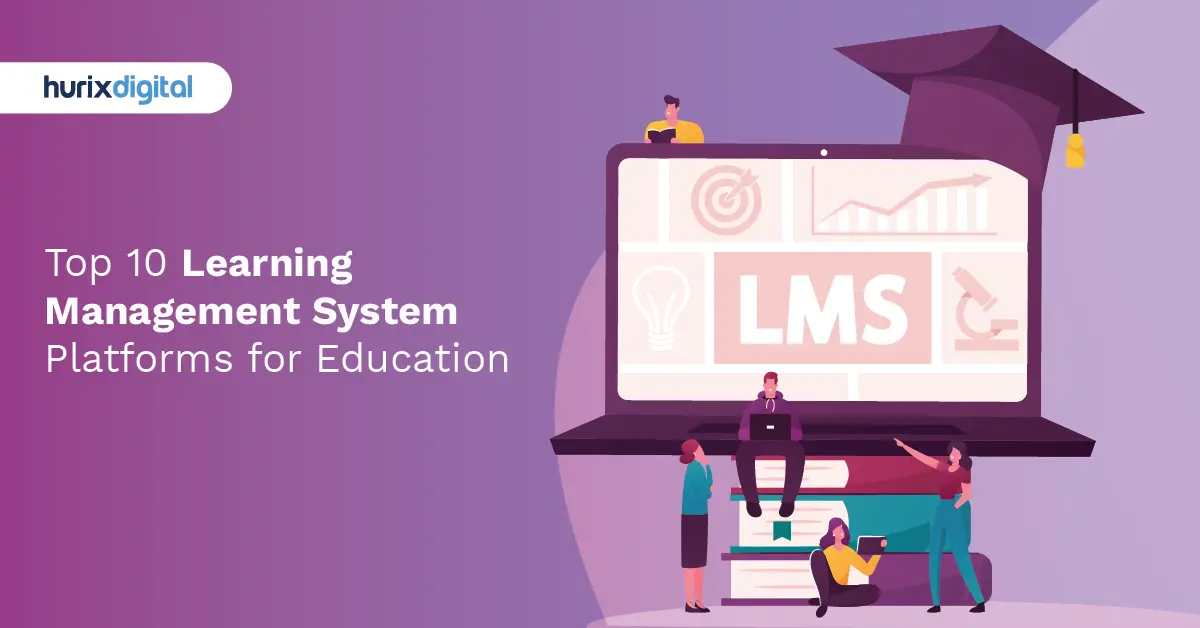
Top 10 Learning Management System Platforms for Education
Summarize with:
Are you seeking a strategy to improve the learning and development process at your educational institution? Do you want to give your students a centralized platform where they can access all of their learning resources, track their progress, and collaborate with other students? If so, you’ll want LMS platforms!
An LMS is software that allows educational institutions to design, manage, and distribute eLearning material and training programs to their students. With the development of online learning, LMS platforms have grown in popularity among educational institutions all over the world.
In this blog article, we’ll look at the best ten LMS platforms for education, ranked by features, cost, and user reviews.
Table of Contents:
- What is a Learning Content Management System (LCMS)?
- Understanding the Features of LCMSs
- Advantages of a Learning Content Management System
- Eight Reasons Why IoT in LMS is the Future of Learning
- Top 10 LMS Platforms for Education
What is a Learning Content Management System (LCMS)?
A learning content management system (LCMS) is a progressive form of the content management system (CMS) that concentrates solely on producing learning material. In addition, the primary purpose of an LCMS is to make the management, creation, and delivery of educational material more effective and efficient.
With the help of LCMSs, teachers and trainers can create multimedia-rich content, such as animations, videos, simulations, and interactive activities. They can also manage the content in a centralized spot, making it seamless to revise and circulate to students.
Understanding the Features of LCMSs
LCMSs are designed to facilitate creating and delivering learning content across multiple channels, such as web-based courses, mobile devices, and other online learning platforms.
Below are some key features of a learning content management system.
1. Content Management
The content management feature allows users to manage and organize learning content effectively. Moreover, with an LCMS, individuals can track, store, and update learning content in a central warehouse. It makes handling considerable amounts of learning content easier and ensures students have access to the most up-to-date content.
2. Content Creation
The content creation feature of an LCMS allows instructional designers, subject matter experts, and trainers to create multimedia-rich learning content.
LCMSs typically provide content creation tools, such as authoring tools, video/audio editors, and graphic design tools. An LCMS’s content creation feature helps create engaging and interactive learning content that can keep learners motivated and interested.
3. Content Delivery
The content delivery feature of a learning content management system allows users to provide learning content to students across different devices, platforms, and locations.
LCMSs generally support various delivery modes, such as mobile learning, web-based courses, virtual classrooms, and combined learning. Besides, the content delivery feature of a learning content management system ensures that students have access to learning content anytime, anywhere.
4. Assessment and Evaluation
An LCMS’s assessment and evaluation feature allows users to create and administer assessments and evaluations to measure learner progress and performance.
LCMSs typically provide a variety of assessment types, such as quizzes, tests, and surveys. An LCMS’s assessment and evaluation feature helps ensure that learners have achieved the desired learning outcomes and that their progress is evaluated and monitored.
5. User Management
The user management feature allows users to oversee instructors, learners, and administrators. This feature authorizes users to create and handle user profiles, track user progress, and assign roles and permissions.
It helps ensure that learners receive the appropriate level of access to learning content and that their progress is tracked and monitored.
6. Social Learning
The social learning feature of a learning content management system allows students to communicate and collaborate and instructors. It enables students to share ideas, knowledge, and feedback and to learn from each other.
It also helps create a cooperative learning environment that encourages learning and engagement.
7. Reporting and Analytics
An LCMS’s reporting and analytics feature gives users detailed insights into learner progress, performance, and engagement. LCMSs typically provide reporting and analytics tools like dashboards, graphs, and charts.
Moreover, this feature helps determine areas where students are struggling and where progress can be made in learning content and delivery.
8. Personalization
The personalization feature of an LCMS allows users to customize learning content to meet individual learners’ specific needs and preferences. It enables the creation of personalized learning paths, content, and assessments based on learner profiles and performance data.
It also helps increase learner engagement and motivation by providing learning content that is relevant and meaningful to learners.
Advantages of a Learning Content Management System
Learning content management systems offers different advantages to organizations and educators, making it a worthwhile investment. Below are some of their key advantages
1. Scalability
A learning content management system is highly scalable and can efficiently manage large amounts of academic content. It is particularly essential for developing companies that need to expand their educational content.
LCMSs allow instructors to create and provide content to many trainees without performance issues. As learners thrive, LCMSs can adapt to the increased demand for educational content.
2. Streamlined Content Creation and Management
An LCMS allows educators to create and handle educational content in a streamlined way. It offers a centralized forum for content creation, assessment, and authorization.
With LCMSs, educators can team with other team associates in real-time, which makes the content-creation process more efficient. Additionally, such systems provide version control, so educators can track changes made to the content over time, making it more effortless to maintain a consistent message and avoid mistakes.
3. Cost-Effective
An LCMS is a cost-effective solution for organizations that need to deliver educational content. It eliminates the need for physical classrooms, textbooks, and other materials, which can significantly reduce costs.
LCMSs also provide a centralized platform for content creation and delivery, reducing the need for multiple systems and tools.
4. Customization
LCMSs allow educators to customize the educational content based on the needs of the learners. They can create content tailored to learning styles, knowledge levels, and preferences. By offering customized content, learners are more likely to engage with the material and retain the information.
5. Improved Learner Engagement
A learning content management system offers several features that enhance learner engagement. For instance, LCMSs provide interactive content, such as games, quizzes, and simulations, making learning more engaging and enjoyable.
Additionally, LCMSs can provide learners with personalized feedback, which can help them understand their strengths and weaknesses and improve their performance.
6. Analytics and Reporting
An LCMS offers robust reporting and analytics features that allow educators to track student performance and gauge the effectiveness of the learning content.
Analytics can deliver insights into learner behavior, such as which parts of the content they find most challenging and how much time they spend on it. This data can help educators make data-driven choices and improve the educational content over time.
7. Accessibility
LCMSs allow educators to deliver educational content to learners regardless of their location. Additionally, an LCMS provides accessibility features, such as closed captioning, which makes the content accessible to learners with disabilities.
Eight Reasons Why IoT in LMS is the Future of Learning
Integrating IoT (Internet of Things) technology into Learning Management Systems (LMS) has the potential to revolutionize the future of learning. Here are some reasons why:
- Real-Time Data and Analytics: IoT-enabled devices can collect and transmit data in real time. By integrating IoT technology into an LMS, educational institutions can gather valuable insights into student behavior, engagement, and performance. This data can be used to personalize learning experiences, identify areas for improvement, and provide timely interventions to support student success.
- Personalized and Adaptive Learning: IoT can enable personalized and adaptive learning experiences by collecting data on individual students’ preferences, learning styles, and progress. By integrating this data into the LMS, educational content and resources can be dynamically tailored to each student’s needs, providing a more effective and engaging learning experience.
- Smart Classrooms: IoT devices such as smart boards, sensors, and wearable devices can transform traditional classrooms into smart learning environments. These devices can interact with the LMS to automate administrative tasks, monitor student attendance, track learning progress, and provide real-time feedback. Smart classrooms equipped with IoT technology can enhance collaboration, interactivity, and overall learning outcomes.
- Seamless Access and Connectivity: IoT devices can enable seamless connectivity and access to educational resources. For example, students can use their IoT-enabled devices, such as smartphones or tablets, to access course materials, participate in virtual classrooms, and interact with online learning platforms. This flexibility and convenience promote anytime, anywhere learning, breaking down barriers of time and location.
- Experiential and Immersive Learning: IoT technology can facilitate immersive and experiential learning experiences. For instance, augmented reality (AR) and virtual reality (VR) devices can be integrated with the LMS to provide simulated environments and interactive content, enabling students to explore complex concepts, engage in hands-on activities, and develop practical skills.
- Collaboration and Remote Learning: IoT-enabled devices can foster collaboration among students and educators, even in remote or distributed learning settings. By integrating IoT technology into the LMS, students can collaborate on projects, share resources, and communicate seamlessly with peers and instructors. This enhances social learning, teamwork, and knowledge sharing.
- Enhanced Safety and Security: IoT devices can contribute to a safer learning environment. For example, connected sensors can monitor classroom conditions, detect hazards, and ensure the safety of students. In emergency situations, IoT-enabled systems can facilitate prompt communication and response, ensuring the well-being of students and staff.
- Continuous Learning and Feedback: IoT technology can enable continuous learning and feedback loops. By tracking student progress, collecting data on learning activities, and providing real-time feedback, the LMS can support students in their ongoing learning journey. Adaptive assessments and personalized recommendations based on IoT data can help students identify areas for improvement and guide their learning paths.
Top 10 LMS Platforms for Education
These are the top 10 best LMS platforms for education:
1. Hurix Digital
Hurix Digital is a comprehensive LMS platform that offers learners personalized and engaging learning experiences. Hurix provides a wide range of services, including:
- eLearning Development: Hurix Digital creates custom eLearning solutions for businesses using a variety of formats, such as interactive simulations, gamification, and microlearning. They also offer localization and translation services for global businesses.
- Digital Content Creation: Hurix Digital creates high-quality digital content, including videos, animations, and graphics. They use cutting-edge technology to produce engaging and interactive content for a variety of platforms.
- Platform Management: Hurix Digital offers end-to-end platform management services, including platform design, development, hosting, and maintenance. They also provide analytics and reporting tools to help businesses track the effectiveness of their eLearning programs.
- Mobile Learning: Hurix Digital specializes in mobile learning solutions, creating mobile-friendly eLearning content and apps that can be accessed on smartphones and tablets.
2. Moodle
Moodle is an open-source LMS platform that includes course administration, grading, and assessment tools. Moodle also supports several languages, making it a popular choice for universities working in multilingual settings.
One of Moodle’s most significant features is its vast developer community, which is always working to improve the platform.
3. Edmodo
Edmodo is another cloud-based LMS platform that is intended to be user-friendly for both educators and students. Assignment and grade management, communication tools, and a collaborative learning environment are among its primary features.
Edmodo also provides a variety of third-party connections, making it simple to integrate other educational tools and resources into the platform.
4. Blackboard
Blackboard has been a popular LMS platform for more than two decades. Course administration, content development, and student interaction tools are among its primary features.
Blackboard also provides a variety of analytics tools to help educators analyze student achievement and find areas for improvement. One of the most significant benefits of Blackboard is its scalability, which makes it an excellent solution for colleges of all sizes.
5. Canvas
Canvas is one of the cloud-based LMS platforms that includes course management, grading, and assignment tools. Canvas also provides several customization possibilities, allowing educators to customize the platform to their requirements.
Canvas’s user-friendly interface is one of its primary features, making it simple for both educators and learners to navigate and use the platform.
6. Schoology
Schoology has an easy-to-use interface and extensive tools for creating, managing, and delivering courses and tests. Teachers may use Schoology to manage course materials, assignments, and grades, as well as connect with students and parents.
Schoology accepts a variety of material forms, including multimedia and interactive information, and it connects with other educational programs like Turnitin, Google Drive, and Khan Academy.
7. Brightspace
Brightspace is a mobile-first design that allows students to access courses and information from any device. It also incorporates interactive multimedia material like movies, simulations, and virtual reality to engage students and improve their learning experience.
Brightspace distinguishes itself by its emphasis on individualized and adaptable learning. Its intelligent agents monitor student behavior and offer tailored learning routes using machine learning methods.
8. Absorb
Absorb LMS is a cloud-based LMS platform for enterprises, organizations, and educational institutions. It has an easy-to-use interface, customized course authoring, and extensive reporting and analytics options. Absorb LMS supports a variety of multimedia types, including films, animations, and interactive quizzes.
To boost learner engagement and motivation, the platform offers gamification elements such as badges and leaderboards. Absorb LMS also integrates with a variety of third-party platforms, including Salesforce, Zoom, and Shopify. Its cost is determined by the size of the organization and the features required.
9. Google Classroom
Google Classroom is a cloud-based LMS platform that connects with Google’s suite of productivity products, such as Google Docs, Google Drive, and Google Calendar.
It is intended for use in K12 schools and higher education institutions for the creation and management of digital classrooms, assignments, and communications. Instructors may simply develop and share course materials, quizzes, and exams, as well as give students feedback and scores.
10. Talent LMS
Talent LMS is a cloud-based LMS platform that serves enterprises, organizations, and educational institutions. It has an easy-to-use interface, customized course authoring, and extensive reporting and analytics options.
The platform supports a variety of multimedia content forms, including films, presentations, and e-books. Gamification components like badges, points, and leaderboards are also included to improve student engagement and incentives.
Conclusion
Ultimately, LMS platforms are a vital tool for educational institutions. It can assist universities in providing students with interesting, individualized, and successful learning experiences. With so many LMS systems on the market, it might be difficult to select the best one for your school.
Yet, you may make an educated selection by assessing your institution’s needs, budget, and goals. Evaluate platform features, user usability, scalability, security, and customer support. Consider the comments and experiences of other users via internet reviews, testimonials, and case studies.
Whichever platform you pick, invest in training and support for your teachers, staff, and students. A well-implemented and maintained LMS may improve student engagement, cooperation, and accomplishment while also contributing to the success of the institution.
For more information on LMSs and to learn about other learning management system examples, connect with our team for a 15-minute discovery call today.
Summarize with:

Senior Vice President
A Business Development professional with >20 years of experience with strong capability to sell new solutions and develop new markets from scratch. New Market Entry Specialist with experience working in the largest emerging markets. Exceptional experience in conceptualizing, ideating and selling new learning technologies like VR AR, etc. across multiple industry verticals.