 A Space for Thoughtful

Immersive Learning, Unlocked! Ingenious Ways Virtual Experiences is Changing Education
Summarize with:
The concept of immersive education has changed vastly over the past couple of years. What used to consist of field trips to the zoo, a monument, the courts, or a museum is today being replaced by technology. Gone are the days when learning in a classroom merely involved a teacher or a professor standing in front of a class and reading out a textbook all day long. Today, education technology such as Artificial Intelligence (AI), Machine Learning (ML), and Virtual Reality (VR) has made day-to-day learning a lot more immersive and engaging.
What benefits does immersive education, as we know it today, offer students and teachers? Moreover, how can including AR education and VR education in curricula prepare students for the future? As per Forbes, it matters a lot. Learning through immersive experiences can increase knowledge retention by as much as 75%. This statistic highlights the significant impact of immersive learning on knowledge retention and overall educational effectiveness.
This guide takes you through each of these aspects in detail, thereby giving you a window into the future of the world of education.
Table of Contents:
- What is Immersive Education?
- The Importance and Benefits of Immersive Education
- Types of Immersive Learning Technologies
- Strategies for Creating an Immersive Learning Environment
- Measuring the Impact of Immersive Technology in Education
- How Can Immersive Education Prepare Students for the Future?
- In Conclusion
What is Immersive Education?
Immersive education is a pedagogy that uses the power of digital learning technologies, augmented with AI, to create digital (or virtual) scenarios of the real world in an engaging, interactive learning environment. In simpler words, it stimulates real-world scenarios digitally, evoking a response from the learner in stimulation. This teaching method is unique in its application because the learner is actively engaged in the learning environment and interacting with the lesson. The educators also get real-time feedback, updating them on each learner’s engagement levels, progress, and performance in the lesson.
This approach involves integrating the physical world with a simulated or digital realm, enabling users to access content in any direction. The two predominant immersive technologies are virtual reality (VR) and augmented reality (AR). In VR, simulations empower students to conduct experiments in a risk-free environment, making education engaging and unique. Conversely, augmented reality (AR) superimposes digital information onto the real world, creating a harmonious blend of the virtual and physical. Consequently, immersive technologies take a hands-on learning approach, boosting overall comprehension while actively nurturing critical thinking and problem-solving skills.
The Importance and Benefits of Immersive Education
One of the ways this learning can make a big impact on both corporate training and classroom teaching is by creating an engaging and memorable learning experience. It activates multiple senses, such as sight, hearing, and touch, thereby capturing students’ attention and keeping them actively engaged in the learning process. This heightened level of engagement results in a deeper understanding of the subject matter and better knowledge retention. Additionally, immersive education enhances the ability to elicit emotions in learners, which can further lead to better learning. Emotionally charged scenarios and simulations allow student engagement with the subject matter in a way that might not be possible with traditional teaching approaches. This emotional connection improves the learning experience and makes it more meaningful and memorable.
Immersive learning platforms provide not only the benefit of efficacy in course delivery but several others to both educators and students.
1. Improved Engagement and Collaboration
The immersive learning curriculum is highly engaging because it stimulates more than a learner’s visual and aural attention. It also encourages interaction, decision-making, and action, leading to better engagement. Students can focus more of their attention on devising solutions to the problems presented to them through immersive learning. Furthermore, maintaining student involvement in traditional classrooms can be difficult, especially as attention spans get shorter. Immersive learning modules address this problem by providing a collaborative learning environment. For example, students can explore historical sites, ecosystems, or even space without ever leaving their computers thanks to virtual field trips.
2. Better Memory Retention
Typically, individuals are less likely to form strong memory connections when reading or hearing about something than when actively experiencing it. That’s where immersive education steps in, offering a deeper understanding. Think about it like having a front-row seat to different angles and perspectives. When you get hands-on experience, touch, move stuff around, and dig into how things work, it’s like making memories that come pretty close to the real deal. According to recent research, VR learning demonstrated a retention rate of 75%, significantly surpassing the rates observed in lecture-style learning (5%) and reading (10%).
3. Personalization
Educators can tweak the learning program of each student according to their capacity for learning and content consumption preferences. For example, for quick learners, educators can speed up or increase the difficulty of the course. On the other hand, for learners who face difficulties, educators can incorporate hints, tips, and tricks into the course. Learners can also set the pace of their own course. Adaptive immersive learning modules powered by AR/VR technologies can assess a student’s progress in real-time and dynamically adjust the difficulty level, pace, or feedback to address specific needs.
4. Immediate Feedback and Safe Practical Learning
The interactive modules are designed so that students receive immediate feedback on their performance for a particular task. In case their problem-solving approach was correct but the solution was wrong, they will get prompt feedback to try again. Similarly, feedback can incorporate rewards for those who have performed well on a task.
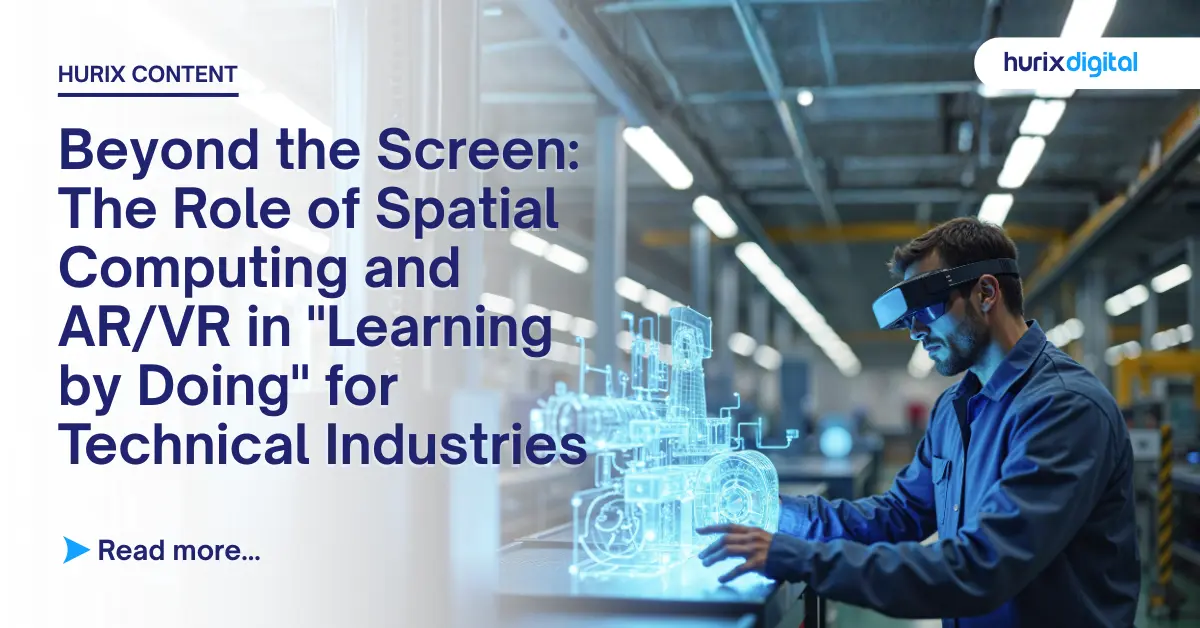
This is especially critical in industries like manufacturing, healthcare, or construction, where hands-on, technical practice is a must. Immersive education allows students to practice and get firsthand experience in a safe environment. New doctors, for instance, can practice tricky scenarios without real-world consequences, tackling complex cases before they are face-to-face with a patient. This process helps students learn from their mistakes and bridges the gap between theory and application.
5. Experiential Learning and Skill Enhancement
Hands-on experiences while learning facilitate better recall and retention of the concepts taught during the lesson. This vibrant departure from monotonous lectures transforms learning into an adventure. Interactive simulations empower students to learn by doing rather than by passive observation. If mistakes occur, students can repeat the simulation until they achieve the desired outcome, ensuring a comprehensive understanding. In fact, learners who are trained through VR are 40% more confident in skill application and can perform tasks 4x faster than classroom learners.
6. The Psychological Impact
All these cutting-edge immersive learning methods also have a significant and evident impact on the psychology of learning.
- Presence and Engagement: Immersing oneself in a VR environment, such as the Colosseum or a live historical war, skyrockets the levels of engagement. Virtually being there captivates a student’s attention, turning passive students into active explorers.
- Cognitive Load: In traditional classroom education, learners often juggle multiple concepts. With immersive education, much of this cognitive baggage can be offloaded. Its interactive and visual aspects help free up mental space for a more robust understanding of concepts.
- Emotional Quotient: Virtual experiences can promote empathy and social-emotional learning (SEL). For example, navigating virtual conflicts or experiencing historical injustices firsthand builds sensitivity and emotional intelligence. PwC found that VR learners exhibit a 3.75 times greater emotional connection to learning content.
- Self-Efficacy: Practicing complicated procedures in a safe space broadens horizons and relieves a learner of self-limitations. For students from remote areas or with financial limitations, immersive methods can boost their self-esteem and motivate their will to learn.
Types of Immersive Learning Technologies
Whether it’s immersive learning within traditional classrooms, hands-on vocational training, or informal yet engaging encounters like interactive museum displays, familiarizing oneself with diverse technologies marks the initial and essential phase for educators. Each variant of immersive educational technology offers distinct advantages. These include the following:
1. Virtual Reality (VR)
Virtual reality (VR) is one of the most useful technologies to support immersive education, as it enables fully immersive experiences. Accessible through VR headsets, this experience is often enhanced with headphones and hand controllers, empowering learners to navigate and interact within their virtual environment. This simulation-based learning environment is specifically effective for training that requires a physical presence, such as healthcare practices.
2. Augmented Reality (AR)
In contrast to isolating the real world, augmented reality (AR) seamlessly integrates it with digital content. The digital elements can vary, ranging from flat and 2D, ideal for instructional information, to more intricate and lifelike in 3D. Activation of content can be linked to specific objects or geographical locations. Accessible through mobile devices like smartphones and tablets, learners can easily engage with the content. For instance, learners can use AR to visualize additional information that isn’t possible in the natural environment, which is useful for tasks that require contextual information, such as learning about historical sites.
3. Mixed Reality (MR)
Mixed reality (MR) integrates features of both virtual and augmented reality. Like AR, mixed reality overlays digital content onto the real-world environment, connecting and interacting with real-world objects. A notable distinction lies in the fact that in mixed reality, digital assets can be visibly obscured by real-world objects. This is most beneficial in concepts like collaborative product development.
4. 360-Degree Film/Learning
360-degree video is typically captured live rather than generated by a computer. While you can experience this content through a VR headset, immersing yourself in the environment, the learner remains tethered to the filmmaker’s viewpoint. This format allows the learner to move their head for a panoramic view of the surroundings without being physically present, but full interactivity is limited.
5. Simulation-Based Learning
Simulation-based learning is all about replicating real-world scenarios and using computer-based models to present them to learners. Simulations work in practical fields like aviation, where pilots can train on flight simulators to experience flying an aircraft without leaving the ground. It allows learners to practice and experiment in life-like situations, promoting hands-on experiences that empower them to complete tasks and solve problems.
6. Gamification-Based Learning
This kind of immersive learning is best suited for K12 learners, where educational content can be made more fun and engaging. You can introduce reward-based learning, challenge-based tasks, interactive quizzes, and other contest-based techniques to motivate learners while they enjoy the process.
Strategies for Creating an Immersive Learning Environment
Like any other form of education, immersive learning aims to expand a learner’s knowledge base and equip them with new skills. By adopting immersive learning technologies, educators take the educational experience to the next level; however, successful implementation can often be challenging. To navigate this process effectively, educators can follow certain key teaching strategies.
1. Define Learning Objectives
For each immersive learning experience, clearly define the specific learning goals. Determine the exact skills, knowledge, or behaviors that you aim for your students to develop. Setting clear, targeted objectives ensures that the immersive experiences are purposefully aligned with the overall educational objectives, providing a focused and guided approach.
2. Design Immersive Content
Create exceptional content specifically designed for immersive experiences. Develop engaging scenarios, simulations, or activities that incorporate gamification principles, enabling students to practically apply their knowledge and skills. Utilize storytelling methods and interactive features to boost learner engagement and memory retention. Continuously update and refine the content to maintain its relevance and to meet the evolving needs of the learners effectively.
3. Use Adaptive Learning Platforms
Adaptive learning platforms are becoming increasingly popular across industries. These platforms can answer questions and gauge how well users are grasping the material. With this data, they modify the user’s experience, paving the way for personalized learning.
4. Foster a Culture of Collaboration and Social Learning
Promote teamwork, knowledge exchange, and peer learning within the immersive environment. Give your students the freedom to share their perspectives, discuss their experiences, and learn from one another. Including ways for learners to interact through chat forums, collaborative modules, and peer review tasks encourages social learning. This cultivates an environment of ongoing development where students feel encouraged to explore, experiment, and actively participate.
5. Make it More Accessible
Incorporate learning on the go with a responsive design. Utilize microlearning, just-in-time learning, and on-the-job tools as integral components of your immersive environment. Furthermore, make sure the platform is compatible with assistive technology and is available in different formats so that students with visual and hearing impairments can access the subject matter with ease. Accessibility is key to creating a successful course.
6. Seamlessly Integrate with Existing Programs
Identify opportunities where immersive learning can support or enrich traditional training methods. Integrating immersive learning with traditional classroom teaching, online courses, or on-the-job training provides a well-rounded educational experience.
7. Emphasize Realism and Interactive Elements
Immersive learning technologies can create hyper-realistic simulations of real-world scenarios to help enhance learning. Incorporating this in your lessons may help better develop your students’ problem-solving or analytical capabilities. The inclusion of interactive elements, such as gamified assessments, videos, and podcasts, also helps to make the experience more experiential.
Measuring the Impact of Immersive Technology in Education
Immersive technology has the potential to create an engaging and fun-filled learning environment for students. As per recent research, the market for immersive technology in education is projected to reach a revenue of 40.70 billion USD by 2032. However, to ensure its effectiveness, it’s crucial to measure its impact.
Aspects to Consider
The following factors should be considered while measuring the impact of immersive education:
- Effectiveness of Technology: Assess how well the technology meets the defined learning outcomes.
- Level of Personalization: Evaluate how the technology adapts to individual student needs and learning styles.
- Cost: Consider the upfront expenses for hardware and design against the long-term benefits of training large groups.
- Availability and Accessibility: Ensure the technology is accessible to all students, considering potential digital divides.
- Technical Requirements: Evaluate the hardware, software, and infrastructure needed for successful implementation.
Tools and Methods Used
To assess the impact of immersive technology, several tools and methods can be used to measure its effects in educational settings.
- Surveys and Questionnaires: Gather input from students to learn about their opinions, difficulties, and recommendations.
- Data Analytics: Track learning outcomes, knowledge retention, and performance metrics. Learning data can be collected in real-time in VR, offering a comprehensive toolset to evaluate each learner.
- Personalized Assessments: Use assessments embedded within the immersive experience to gauge understanding and skill application.
By utilizing these methods, educators can gain a better understanding of how immersive technology affects students’ day-to-day education and make informed improvements to the learning environment.
How Can Immersive Education Prepare Students for the Future?
Incorporating elements of immersive education into the curriculum offers a host of benefits, strengthening students’ foundations for the future. From improving learning retention to building critical problem-solving skills, the list of these benefits is endless.
1. It Improves Learning Retention
Immersive education has the potential to significantly improve information retention. A study shows that VR, as a form of immersive learning, can help students recall information correctly by 75%. This demonstrates how immersive technologies help students retain information longer and more accurately than via traditional rote learning. Additionally, it provides practical exposure to concepts they would otherwise only read about.
2. It Helps Students Experience the Impossible
While field trips are great resources for experiential learning, they have limitations due to budgets or safety. In situations like these, immersive technologies like VR can be invaluable. For example, a marine biology student can witness how a coral reef ecosystem works firsthand, experiencing the underwater world in a way that would otherwise be challenging. The market for VR in education is projected to grow at a CAGR of 39.2%, showing the increasing impact of this technology.
3. It Helps Students Develop Critical Problem-Solving Skills
Traditional rote learning often relies on producing memorized answers, which reduces the opportunity for students to think critically. On the other hand, when students are presented with a scenario in an almost life-like context, they have a better chance of learning how to navigate practical challenges. These problem-solving skills, incorporated into curriculum development, can be crucial when students enter a competitive professional landscape.
4. It Facilitates the Practical Application of Knowledge
One of the key benefits of immersive learning is that it instills practical knowledge rather than just theoretical information. Immersive and gamified learning elements bridge the gap between academic knowledge and its real-world application. This practical experience enables students to be more capable of finding practical solutions to problems.
5. It Can Help Develop Critical Soft Skills
Beyond hard or technical skills, immersive education can also help students develop a more global perspective and become empathetic human beings. Technology can transport students anywhere in the world, allowing them greater exposure to different cultures, traditions, and identities. This exposure, in turn, can help them grow into globally competitive and aware individuals while also developing key skills like empathy.
In Conclusion
Immersive education is one of the most impactful developments in the world of learning today, and its use is only expected to increase. The widespread adoption of these technologies will continue to reshape the educational landscape, ushering in an era where hands-on, personalized learning experiences are not just the future but a present-day reality.
From improving learning retention to building critical problem-solving skills, the benefits of immersive education are extensive. Educational institutions that invest in these technologies will be well-positioned to provide their students with dynamic, engaging, and highly effective learning environments, preparing them for the challenges and opportunities of our interconnected world.
If you’re an educational institute looking to capitalize on the benefits of this changing landscape, learn more about immersive learning technologies. Discover how adaptive Higher Education and K12 Content Solutions from providers like Hurix Digital can help you create the perfect learning environment to enhance knowledge and understanding. Contact us today to embark on a transformative, immersive learning journey!
Summarize with:

Senior Vice President
A Business Development professional with >20 years of experience with strong capability to sell new solutions and develop new markets from scratch. New Market Entry Specialist with experience working in the largest emerging markets. Exceptional experience in conceptualizing, ideating and selling new learning technologies like VR AR, etc. across multiple industry verticals.