 A Space for Thoughtful

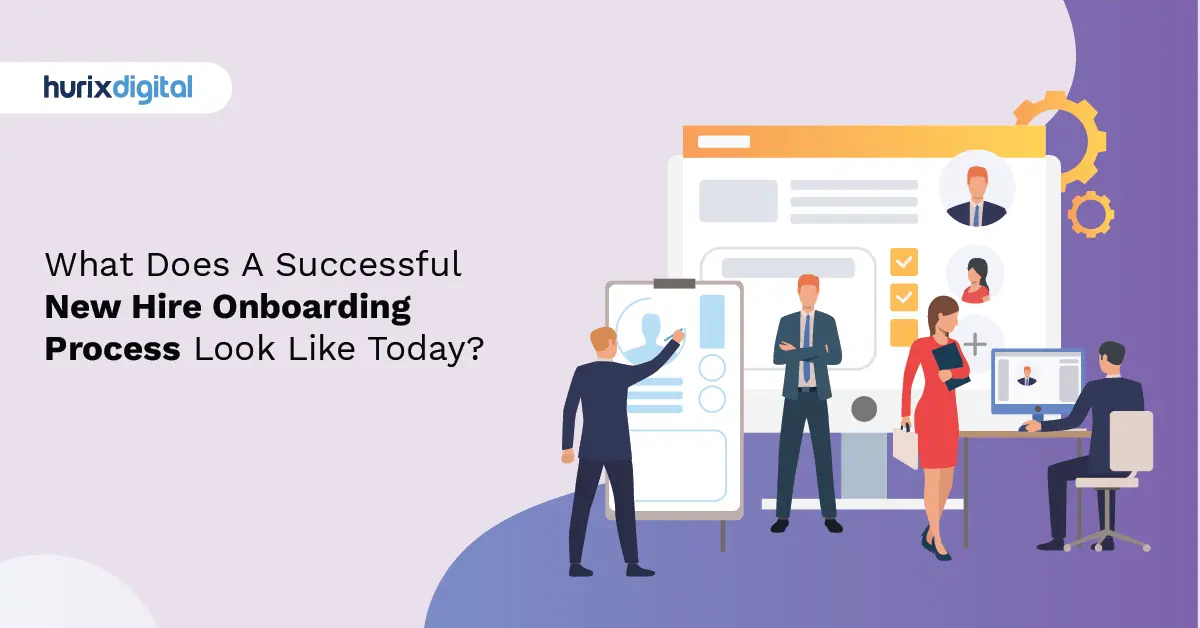
What Does A Successful New Hire Onboarding Process Look Like Today?
Summarize with:
Remember your first day at a new job? The awkward shuffling of papers, the IT guy who forgot your password, and that three-hour PowerPoint presentation about compliance that made you question every life choice leading up to that moment.
We’ve all been there. And frankly, it’s a miracle we stayed. But the workforce has shifted. Remote and hybrid work aren’t “trends” anymore; they are the baseline. Gen Z is moving into management, and Alpha is knocking on the door. In this landscape, a clunky, paper-heavy introduction just doesn’t cut it. If you want to keep top talent, your new hire onboarding process needs to be more than just a checklist. It needs to be an experience.
We are going to merge the best strategies for welcoming new employees with the technical realities of getting them to actually use your eLearning tools. Whether you are battling low adoption rates for your training software or just looking for effective ways to humanize the digital handshake, this guide covers it all.
Let’s fix your onboarding.
Table of Contents:
- Why the “Old Way” is bleeding Talent
- Phase 1: Pre-Boarding (The “Engagement” Before the Marriage)
- Phase 2: The First Week (Structure vs. Chaos)
- Phase 3: Overcoming eLearning Adoption Challenges
- Phase 4: Beyond the First Month (The 90-Day Ramp)
- The Role of Tech in Onboarding
- A Checklist for the Modern Onboarding Process
- A Final Word
Why the “Old Way” is bleeding Talent
First, let’s look at the stakes. You spend thousands recruiting the perfect candidate. You woo them. They sign. Then, you dump a 50-page PDF manual in their inbox and call it “onboarding.”
The result? Buyer’s remorse.
A robust new hire onboarding process is your retention insurance. Research consistently shows that employees who experience structured onboarding are significantly more likely to stay with a company for more than three years. In an era where job-hopping is standard, that stability is gold.
But it’s not just about retention; it’s about velocity. How fast can your new hire go from “Where is the bathroom?” to “I just closed a deal”? That’s the metric that matters.
Phase 1: Pre-Boarding (The “Engagement” Before the Marriage)
Most companies wait until Day 1 to start. That’s a mistake. The period between signing the offer letter and walking through the door (or logging onto Slack) is filled with anxiety for the candidate. Did I make the right choice? Is this company legit?
You need to bridge that gap.
Send the “Care Package”
This doesn’t have to be physical swag (though a branded hoodie never hurts). It can be digital. Send a “Welcome Guide” that isn’t boring legalese. Include:
- A video message from the CEO or their direct manager.
- A “Who’s Who” chart so they know faces before names.
- The agenda for their first week.
- Login credentials (please, for the love of efficiency, have these ready before Monday morning).
Early Access to eLearning
Here is where we start tackling the adoption challenge. If you have a Learning Management System (LMS) or an onboarding portal, give them access early. Don’t make it mandatory—make it curious.
“Hey, if you want to poke around and see how we work, here’s a login.”
This low-pressure introduction helps them get familiar with the interface without the stress of a deadline. It removes the friction of learning a new tool on Day 1 when they are already overwhelmed.
Phase 2: The First Week (Structure vs. Chaos)
The first week sets the tone. If it’s chaotic, they will assume the company is chaotic. If it’s rigid and boring, they will assume you are rigid and boring.
The “Buddy” System
This is one of the most effective ways to onboard new hires, yet it costs nothing. Pair the new hire with a “buddy”—someone who is not their manager.
The manager is for goals and performance. The buddy is for the “stupid” questions.
- How do I use the coffee machine?
- Is it okay to use emojis in emails here?
- Which Slack channels are strictly for memes?
This psychological safety net accelerates social integration, which is arguably harder than technical integration in a hybrid world.
The Content Mix: Death to Long Videos
Now, let’s talk about your training content. You might have amazing material, but if nobody watches it, it’s useless.
Challenges in eLearning adoption often stem from format fatigue. Nobody has the attention span for a 45-minute lecture. We live in a TikTok and Reels world. Your corporate training needs to adapt.
- Microlearning: Break complex topics into 3-5 minute chunks. Instead of “The Complete History of Our Sales Process,” try “How to Log a Call in Salesforce.”
- Gamification: It sounds buzzwordy, but it works. Leaderboards, badges, and progress bars trigger the dopamine receptors that keep us scrolling social media. Use that biology for learning.
- Interactive Scenarios: Don’t just show them a policy; let them “play” through a scenario where they have to apply it.
Phase 3: Overcoming eLearning Adoption Challenges
You built a great new hire onboarding process, but the data shows they aren’t finishing the courses. What gives?
Resistance to new technology usually comes down to three things:
- Complexity: The platform is too hard to use.
- Relevance: They don’t see how this training helps them do their job today.
- Time: They feel they are too busy “working” to stop and “learn.”
Make it intuitive
If your eLearning platform requires a manual to understand, you’ve already lost. The user experience (UX) should be consumer-grade. It should feel like Netflix or Spotify, not Windows 95.
Ensure your employee onboarding software is mobile-responsive. New hires should be able to watch a compliance video on their phone while waiting for their coffee. If you lock learning behind a desktop VPN, you kill adoption.
Explain the “Why”
Adult learners are pragmatic. They need to know why they are learning something.
Don’t just assign “Cybersecurity 101.” Frame it as “How to protect your own data and the company’s reputation.” When you tie learning directly to their personal success and safety, adoption rates climb.
The “Learning in the Flow of Work”
This is the holy grail. Instead of pulling people out of their work to go to a separate “learning portal,” integrate the new hire onboarding process into the tools they already use.
Can you deliver a tutorial directly inside Microsoft Teams or Slack? Can you have a pop-up guide appear inside your CRM software? By reducing the distance between “I need to know this” and “Here is the answer,” you remove the friction that kills adoption.
Phase 4: Beyond the First Month (The 90-Day Ramp)
Most companies stop onboarding after week two. This is where the “new hire slump” happens. The excitement fades, the reality of the workload hits, and the support vanishes.
The 30-60-90 Day Plan
Don’t let them drift. Co-create a 30-60-90 day plan.
- Day 30: Learning mode. Focus on absorption, meeting people, and understanding the product.
- Day 60: Contributing mode. Small wins. Taking ownership of minor projects.
- Day 90: Independence. Running with major projects and suggesting improvements.
This roadmap gives them a sense of progression. It turns the nebulous concept of “getting up to speed” into a concrete checklist.
Continuous Feedback Loops
Don’t wait for the annual review. That’s a relic of the past.
Set up bi-weekly check-ins specifically about the process. Ask them:
- What part of the training was a waste of time?
- What tools are you still struggling with?
- Who should you have met by now but haven’t?
New hires have the freshest eyes. They will spot the inefficiencies in your new hire onboarding process that you have become blind to. Use that data.
The Role of Tech in Onboarding
We cannot ignore the tools. By now, AI should be a massive part of your strategy.
AI Mentors and Chatbots
Imagine a new hire has a question about the vacation policy at 11 PM. They shouldn’t have to email HR and wait two days. An AI-driven chatbot trained on your internal wiki can answer that instantly. This isn’t cold; it’s efficient. It frees up your HR humans to handle the complex, emotional stuff.
VR and AR
For industries with physical components (manufacturing, healthcare, logistics), Virtual Reality is a game-changer. You can have a new hire “walk” through the factory floor or practice a surgical procedure from their living room. Even for office jobs, a VR “headquarters tour” can build culture for remote employees who may never visit the physical office.
A Checklist for the Modern Onboarding Process
To make this actionable, here is your consolidation of effective ways to onboard:
- Pre-Boarding: Send the welcome packet, tech setup, and a warm video greeting before Day 1.
- Day 1: Focus on culture and connection, not just paperwork. Team lunch (virtual or real) is non-negotiable.
- Week 1: Assign a buddy. Grant access to microlearning modules. Set clear expectations.
- Month 1: structured check-ins. Ensure they aren’t drowning in eLearning modules.
- Ongoing: shift from “onboarding” to “continuous development.”
A Final Word
At the end of the day, a new hire onboarding process is just a mechanism to make a human being feel welcome, capable, and valued.
So, where does your onboarding process stand? Are you setting new hires up for success, or are you leaving their early experience to chance?
The investment you make in onboarding pays dividends for years. Learn how our staffing service can help you with better retention, faster productivity, and a stronger culture. Schedule a call with a staffing expert now.
Summarize with:

Senior Vice President – Business Development
at Hurix Digital, with over 25 years of experience in EdTech and workforce learning. He excels in business development, customer relationship management, and scaling digital learning solutions, driving global growth through innovative content, simulations, and AI‑driven training offerings