 A Space for Thoughtful

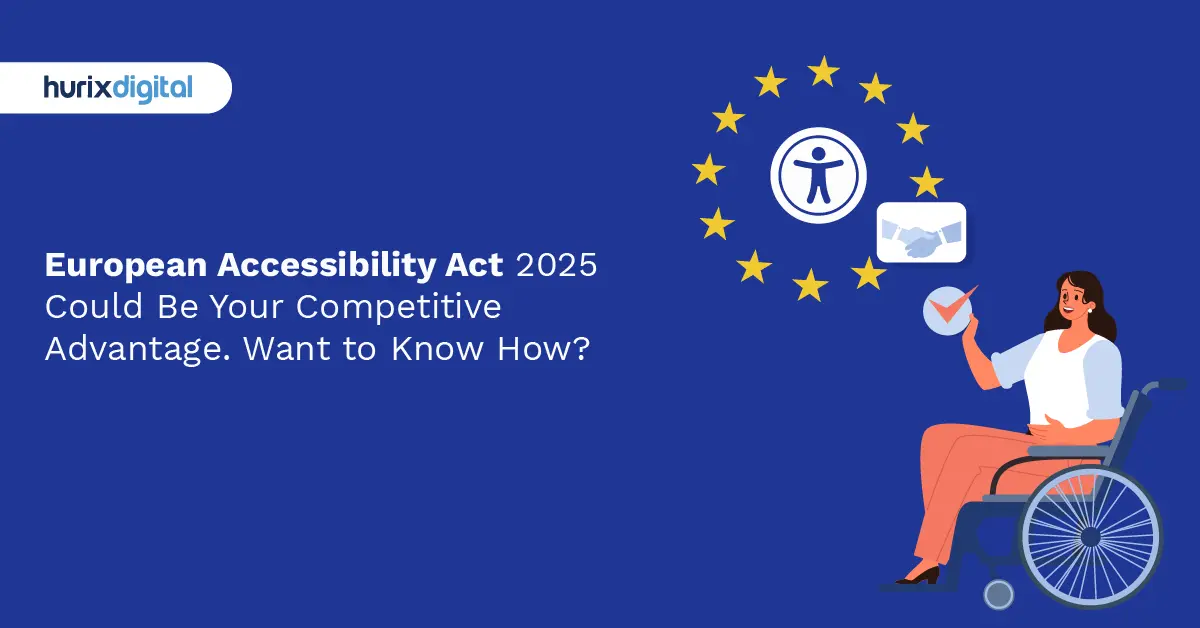
European Accessibility Act 2025 Could Be Your Competitive Advantage. Want to Know How?
Summarize with:
World Health Organization statistics reveal that 16% of the world population experiences some form of disability. This hampers their access to a wide range of products and services in the physical and digital world. However, there has been growing awareness regarding the issue, and countries are making conscious efforts to develop highly inclusive and adaptable digital services.
The European Accessibility Act is one such initiative by the European Union that strives to provide equal digital services to persons with disabilities. Under the accessibility guideline, all public websites and applications are expected to strictly adhere to WCAG 2.1 Level AA guidelines.
If you want to know more about European Accessibility Laws and why they are implemented, you are at the right place.
Table of Contents:
- What is the European Accessibility Act (EAA)?
- Why is Accessibility Important?
- What Will the European Accessibility Act 2025 Entail?
- Which Websites Should Comply with the European Accessibility Act 2025?
- Difference Between the European Accessibility Standards and Other Accessibility Guidelines
- Reasons for Accessibility Compliance in Europe
- Inclusivity and Equal Access
- Legal Requirements
- Market Expansion
- Branding and Reputation
- Boosting SEO
- Implementing accessibility standards automatically improves content structure and quality. Factors such as clear and easy-to-understand content, proper use of headings & sub-headings, and effective keyword usage contribute to positive search engine optimization. There are numerous other overlapping features between website accessibility and search engine optimization. Mentioned here are some examples:
- Uses of the European Accessibility Act
- Top 5 Reasons to Implement the European Accessibility Act Now!
- European Accessibility Act 2025 Requirements for Companies
- The Bottom Line
What is the European Accessibility Act (EAA)?
The UN Convention on the Rights of Persons with Disabilities (UNCRPD) laid the EAA’s foundation. By harmonizing accessibility regulations within every member state, this directive seeks to improve how accessible goods and services are provided throughout the EU in an evolving way.
The European Accessibility Act (EAA) was first put forward in 2011 as an addition to the EU’s Web Accessibility Directive, which was adopted in 2016. A new EAA was implemented in April 2019.
It stated that member states must approve the required implementation legislation by June 28, 2022, and ensure that the EAA’s accessibility provisions are implemented by June 28, 2025. The documentation and monitoring process must be finished by June 28, 2030, and every five years after that.
Why is Accessibility Important?
According to the World Health Organization (WHO), an estimated 1.3 billion people (16% of the global population) live with a disability. These disabilities may include color blindness, limited mobility, and age-related impairments.
However, accessibility isn’t relevant only to people with disabilities. Situational challenges affect most of us, such as struggling to browse a smartphone in bright sunlight.
When discussing website accessibility compliance, we’re talking about ‘design for all,’ a concept that ensures software and websites are built without barriers, allowing everyone to access them, regardless of their abilities.
There are two compelling reasons why the accessibility of digital products matters: ethics and upcoming legislation.
Entertainment, learning and development, personal finances, job hunting, booking a doctor’s appointment… in today’s interconnected world, everything is digital. This is why it is crucial to make digital services accessible to avoid marginalizing individuals and creating a social divide.
This initiative recognizes the need for inclusivity and equal opportunities for all and bridges the accessibility gap.
Get your FREE Accessibility Audit report today!
What Will the European Accessibility Act 2025 Entail?
One common misconception about accessibility is that it only involves font size and contrasting colors, whereas the most critical aspects lie within the code. Screen readers, essential for differently-abled individuals, read the code, not just the visual elements. Writing accessible code is a crucial skill for the future.
The EU’s accessibility law will follow the established WCAG standard, organizing guidelines under four principles: perceivable, operable, understandable, and robust. These guidelines will now apply to companies in the private sector, expanding beyond their current application in the public sector.
The EAA has a comprehensive scope, addressing both digital and physical aspects of accessibility. Let’s explore the key areas covered:
- Digital Accessibility: This means ensuring websites and digital platforms are accessible to everyone. These platforms are crucial channels for eCommerce, communication, and information dissemination. The focus is on adhering to the Web Content Accessibility Guidelines (WCAG), which guide the creation of accessible digital content.
- Assistive Technologies: The EAA recognizes the importance of assistive technologies and calls for compatibility with various devices and software, such as screen readers, magnifiers, and voice recognition tools.
- Electronic Communication: Modern communication heavily relies on telephony services like smartphones and mobile devices. The law wants to make these services accessible to individuals with disabilities.
- Audiovisual Media Accessibility: It also considers audiovisual media- guaranteeing that TV equipment and services offer features such as closed captions and audio descriptions to accommodate people with hearing and visual impairments.
- Banking Accessibility: The EAA strongly emphasizes financial inclusion, making accessible banking services a priority. The goal is for individuals with disabilities to manage their finances independently and with ease.
By implementing these measures, the EAA seeks to create a more inclusive society where all individuals can fully participate and access digital and physical services without barriers.
Which Websites Should Comply with the European Accessibility Act 2025?
The EU Accessibility Act impacts private businesses that provide services via government websites, even though its main goal is to ensure that all government websites adhere to the accessibility requirements.
The 15-page directive covers the public sector’s websites and mobile applications. The rules also apply to third-party suppliers (i.e., organizations funded by public agreements), municipalities, counties, and state administrations.
European accessibility standards centered around the Web Content Accessibility Guidelines (WCAG) 2.0, released by the World Wide Web Consortium (W3C) must be implemented and enforced by all EU member states.
The European Accessibility Act Compliance aims to standardize accessibility for TV gadgets, cell phones, tablets, eBook viewers, and several other devices and websites.
Difference Between the European Accessibility Standards and Other Accessibility Guidelines
The European Accessibility Act (EAA) differs in key ways from current accessibility standards like the Americans with Disabilities Act (ADA) and the Web Content Accessibility Guidelines (WCAG). First, the EAA is a thorough accessibility law that applies to various goods and services.
Second, unlike WCAG, the EAA has legal repercussions, requiring private businesses operating in the EU to follow EAA accessibility standards. Heavy penalties may follow noncompliance to adhere to EAA regulations. So, you must prioritize accessibility to avoid problems with the EAA!
In contrast to other policies, which may have varied legal channels, such as voluntarily complying or commercial lawsuits, the EAA is administered by national authorities in every EU Member State.
Reasons for Accessibility Compliance in Europe
Organizations must prioritize accessibility when developing their digital solutions. This should be a fundamental consideration to ensure that the needs of all users are met. Let’ see why accessibility compliance is necessary in Europe:
1. Inclusivity and Equal Access
Inclusivity and equal access are the primary reasons digital platforms and applications strive to comply with accessibility guidelines. Often, individuals with disabilities like visual or cognitive impairments find it difficult to access critical information and other relevant resources.
This is a major hassle in their everyday lives and hampers their employment and learning. Consequently, website accessibility ensures that all individuals, with or without disabilities, can equally participate in all kinds of online activities and leverage their full potential. Ensuring participation goes a long way in providing every individual with a dignified and independent living environment.
Additionally, website accessibility guidelines are also helpful for people in their old age or those facing circumstantial injury-induced disability.
2. Legal Requirements
Websites and digital platforms that do not adhere to accessibility guidelines will be subject to heavy penalties and strict legal action. The European Accessibility Act 2025 has presented an important deadline for all countries in the European Union that have yet to implement the guidelines.
By 28 June 2025, they must ensure that all administrative digital provisions adhere to strict and robust inclusivity guidelines. Platforms that miss this deadline will face severe legal consequences. Customers and users can also file complaints against them with the national court and other relevant authorities.
3. Market Expansion
Once websites have incorporated accessibility guidelines, they will automatically be able to expand their reach and market by tapping into a previously unexplored customer base. These positive steps towards inclusivity will also provide the platform with a competitive edge. With the advancement in digital technology, the marketplace has become increasingly crowded and competitive.
By offering accessible products and services, customers will begin to prioritize the platform, thus demonstrating their loyal commitment. This gradual market expansion can eventually increase a company’s global reach. With a well-established customer base, it becomes easy for organizations to enter the international market and diversify.
4. Branding and Reputation
Another important benefit of adhering to accessibility standards is a positive reputation and inclusive branding. By enabling all customers to have a great user experience, positive publicity will automatically follow via social media platforms, word-of-mouth, online testimonials, and more. A positive brand image and reputation go a long way in attracting loyal customers. Apart from customers, a positive reputation regarding accessibility and inclusiveness will also attract government contracts and tenders.
Governments are constantly looking for businesses that promise equal rights and opportunities to all citizens of the country. To leverage these stakeholder relationships, conduct a digital accessibility audit to ensure your services are up to the accessibility mark.
5. Boosting SEO
Implementing accessibility standards automatically improves content structure and quality. Factors such as clear and easy-to-understand content, proper use of headings & sub-headings, and effective keyword usage contribute to positive search engine optimization. There are numerous other overlapping features between website accessibility and search engine optimization. Mentioned here are some examples:
- Faster loading time
- User-friendly design interface and layout
- Mobile-friendly design
- Alternative text for audio and videos
- Broader audience reach
- Compliance with technical standards like HTML AND CSS3
Uses of the European Accessibility Act
The European Accessibility Act 2025 seeks to promote a more varied market environment that invites individuals with one or more impairments across a wide range to fully engage in today’s world. Some of the use cases of this act are:
1. Online Accessibility
This will entail companies covered by the EAA ensuring websites and digital services are accessible and adhere to the WCAG (Web Content Accessibility Guidelines) fundamentals.
2. Audiovisual Media Accessibility
Businesses that manufacture broadcast devices or supply services associated with them must include accessibility features like closed captioning and subtitles in their products.
3. Financial Services Accessibility
2025 accessibility compliance benefits include simple, autonomous accounting procedures for people with disabilities. This implies that considerable accessibility modifications will also be needed for both online and offline financial services. For example, auditory aids are necessary for ATMs to facilitate easy use by the visually handicapped.
4. Assistive Technology
The EAA demands that digital goods and services, including voice recognition software, be more compatible with assistive technologies.
5. Digital Communication
People with disabilities must readily access and use the main forms of online communication. Email, messaging apps, cell phones, and other devices are included.
Top 5 Reasons to Implement the European Accessibility Act Now!
The following reasons show why it will be immensely beneficial to implement EAA compliance now instead of waiting:
1. Gaining a Competitive Benefit and Expanding Market Reach
Implementing the European Accessibility Act before the 2027 target offers a major competitive edge. The EAA mandates that all goods and services within the EU must prioritize accessibility.
Early adoption of these guidelines will help companies access a large market of over 135 million individuals with disabilities across Europe, as well as an aging population that progressively calls for easily available services.
Implementing the European Accessibility Act can improve brand reputation and help access a larger customer base. Businesses regarded as inclusive leaders are more likely to build customer loyalty and draw in fresh business that prioritizes accessibility.
This proactive strategy might help you establish a special market position by differentiating your company from rivals who could postpone compliance.
2. Avoiding Legal and Financial Penalties
Delaying adherence to the European Accessibility Act 2025 carries major financial and legal consequences. Apart from microenterprises with less than ten employees, the EAA is not only a rule but a mandate applicable to almost all companies operating within the EU. Ignoring the EAA could lead to fines, legal challenges, and a negative brand reputation.
Starting European Accessibility Act implementation now will allow companies to do extensive audits, pinpoint areas needing work, and start adjustments long before the 2025 target. From digital channels to tangible goods, this proactive strategy guarantees that every facet of your company is compliant and lowers the possibility of last-minute mistakes.
Other factors, such as financial consequences, also need to be considered. Early compliance allows one to use a phased approach, distributing expenses over time and avoiding rushed and expensive improvements.
3. Enhancing Customer Experience and Usability
The European Accessibility Act 2025 aims to improve usability for all users, not just those with disabilities. Accessible design always leads to better overall user experiences. For instance, features like easy navigation, accessible writing, and interoperability with many assistive devices can help everyone, not just those with specific needs.
Using the European Accessibility Act’s best practices, companies can improve their goods and services to increase consumer involvement and happiness. Ensuring websites are accessible via screen readers, for instance, benefits visually challenged visitors and enhances SEO, enabling everyone to locate your site more easily.
Including voice commands will help apps and devices be more user-friendly and appealing to a larger audience. Furthermore, an easily accessible design can inspire ideas that would benefit every user.
For example, providing video materials with subtitles helps those with hearing difficulties and also increases the content’s accessibility for non-native speakers or noisy surroundings. These improvements provide a more favorable user experience, improve client retention, and increase conversion rates.
4. Achieving Long-Term Cost Efficiency
A common misconception is that implementing the European Accessibility Act will be unduly expensive. Although producing goods and services incurs upfront expenses, the long-term benefits significantly outweigh these initial costs. Early adoption of the European Accessibility Act compliance benefits can result in significant long-term cost savings.
Early compliance has several financial benefits. It allows businesses to distribute expenses over multiple years. Starting early will help companies manage resources properly, preventing the need for costly last-minute overhauls.
Moreover, developing with accessibility in mind is usually more affordable than later retrofitting goods and services. This approach ensures accessibility is incorporated into the fundamental design process, thereby reducing the need for costly repairs.
5. Contributing to an Inclusive and Ethical Society
Adopting the European Accessibility Act enhances global inclusivity rather than only fulfilling a legal duty. The EAA aims to eliminate barriers for individuals with disabilities, enabling them to participate fully in society and access the same opportunities as everyone else.
Embracing the top reasons for early Accessibility Act implementation can help companies demonstrate a dedication to ethical business operations and corporate social responsibility. Customers, staff members, and partners who support equality and inclusion will find resonance in this strategy, which fits with general societal trends toward increased awareness and appreciation of diversity.
Companies prioritizing accessibility usually reap significant benefits from early European Accessibility Act compliance, with increased consumer loyalty and brand reputation. Accessible businesses are more likely to attract and retain consumers who respect moral behavior, which can lead to long-term corporate success and greater market share.
European Accessibility Act 2025 Requirements for Companies
Companies across various sectors need to follow mandatory requirements to experience the advantages of accessibility compliance. Here are a few EAA requirements:
1. Web Accessibility
If your company has an online presence, its website must adhere to the Web Content Accessibility Guidelines (WCAG). You must also ensure that everyone can access your online store.
E-commerce websites need to ensure that accessibility standards are followed throughout the user experience, from the technical architecture to the aesthetic overlay. Best practices for accessibility in these areas should be incorporated so that pages are mouse-free and usable.
2. Design of Products
Products like ATMs and iPhones need to be made with accessibility in mind. These devices contain functions for visually impaired individuals, such as audio-assisted purchases. For example, if your business produces ATMs, they must now support audio-assisted payments.
This can entail an audio jack and voiceover menu selections to enable visually impaired individuals to finish tasks on their own.
3. Accessibility of Services
The Act requires all services, including transit and Internet banking, to be accessible. This includes the applications and other online platforms through which these services are accessed.
For instance, if you provide internet banking solutions, your smartphone app should support spoken instructions and screen readers. Functions like reviewing account balances and routing payments should be completely accessible.
The Bottom Line
The European Accessibility Act 2025 represents a significant step toward building inclusivity and bridging accessibility gaps among individuals. By following guidelines, educating people, and encouraging innovation, the new law guarantees that no individual is left behind, irrespective of their condition.
With so many requirements to meet, the European Accessibility Act 2025 deadline could appear far off, but we strongly advise getting started as soon as feasible.
Moving quickly not only gives companies time to fulfill regulatory requirements but also enables the progressive adoption of required modifications, the distribution of associated expenses, and the avoidance of interruptions.
Partner with Hurix Digital to elevate your accessibility solutions and make your business regulatory-compliant. From designing an accessible website that complies with the prevalent web accessibility guidelines to conducting seamless accessibility audits, we provide end-to-end solutions for enhanced UX.
Summarize with:

Vice President – Content Transformation at HurixDigital, based in Chennai. With nearly 20 years in digital content, he leads large-scale transformation and accessibility initiatives. A frequent presenter (e.g., London Book Fair 2025), Gokulnath drives AI-powered publishing solutions and inclusive content strategies for global clients