 A Space for Thoughtful
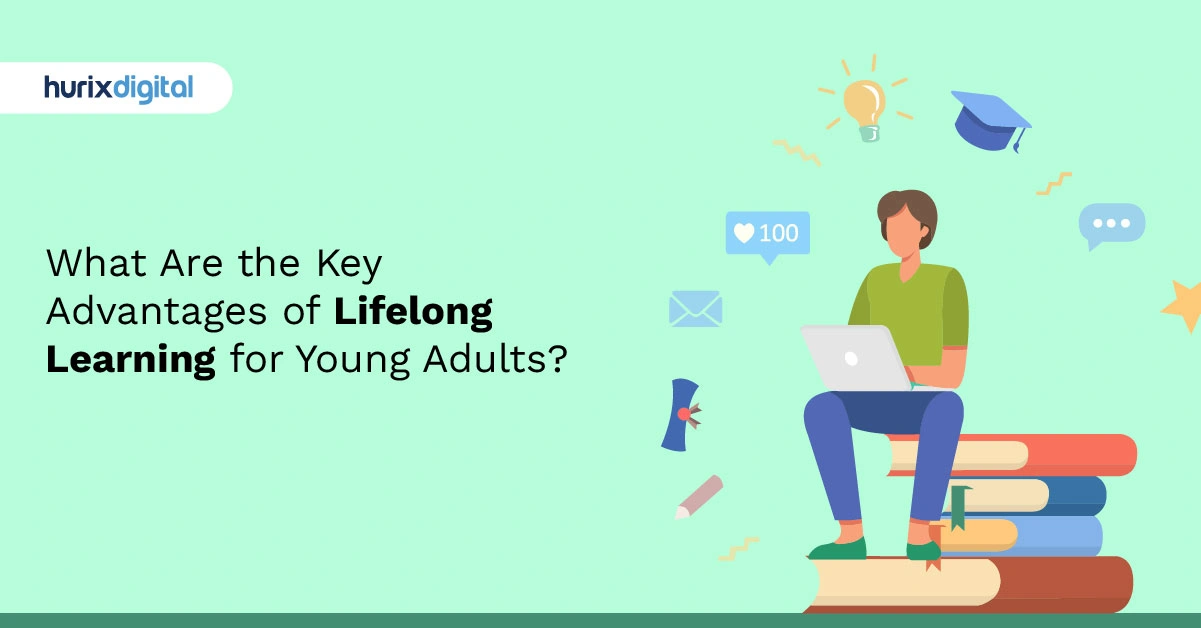
What Are the Key Advantages of Lifelong Learning for Young Adults?
Summarize with:
The last few decades have seen the learner evolve into the current Gen Z or iGen learner, and the learning process itself has undergone significant change. The journey has evolved from a linear, one-dimensional, and formal approach—once assumed to last a lifetime—to a more social, informal, and continuous way of learning. Today, the shelf life of knowledge and skills has reduced considerably. Consequently, learning must be continuous, making the benefits of lifelong learning more important than ever.
This shift has given rise to the concept of lifelong learning. Traditionally, education is associated with formal schooling at a school, college, or university. While formal education and the resulting qualifications are vital for a strong career start, acquiring new skills and reskilling to meet current market demands and maximize opportunities is equally important.
Table of Contents:
- What is Lifelong Learning?
- The Driving Forces Behind Lifelong Learning
- Why Lifelong Learning is a Professional Necessity
- The Personal and Professional Advantages of Lifelong Learning
- How Educational Institutions Can Foster a Culture of Lifelong Learning
- The Future of Learning
What is Lifelong Learning?
Lifelong learning is the ongoing, voluntary, and self-motivated pursuit of knowledge for either personal or professional reasons. It is not confined to the classroom but extends into every aspect of life. This process helps create a positive attitude toward learning for both personal and professional development.
Continuing education, a component of lifelong learning, refers to courses that develop a student’s knowledge in a professional field. These programs are generally offered by colleges, universities, and sometimes schools. Although typically non-credit-based, some institutions offer certificate or diploma courses. These are usually taken by professionals who already hold a formal degree or diploma.
Lifelong learning can be formal or informal, directed or self-paced. It can also be indirect—gleaned from conversations, unexpected life lessons, relationships, and even travel.
The Driving Forces Behind Lifelong Learning
Several factors have made continuous learning not just an option, but a necessity. The proliferation of digital technology, in particular, has transformed how we access and consume information.
The Impact of Digital Technology
Education has transcended the conventional barriers of the classroom and entered the learner’s living room. A few key statistics highlight this transformation:
- 75% of teachers believe that digital learning content will completely replace printed textbooks within ten years.
- 95% of undergraduate learners own digital devices, such as laptops or smartphones.
- The growth of educational technology has been threefold in the past decade.
Abundant Online Resources
Advances in technology have made it possible to access a wealth of information with just a few clicks. No matter your area of interest, a simple search provides millions of articles, blogs, presentations, infographics, free tutorials, and a whole range of other resources. This easy access to information is a primary catalyst for lifelong learning.
The Rise of Social Media
Social media sites like Facebook, LinkedIn, and X have created a more connected world. You can form or join groups and communities to share ideas, debate, seek answers, and raise questions. On platforms such as Quora, you can post a query and immediately receive answers from experts across the globe, removing dependency on a single instructor or library.
The Smartphone Revolution
The widespread availability of the internet and smartphones has revolutionized education. People now consume content on their mobile devices while on the move. Students are no longer restricted to their schools, colleges, and homes to seek information. Instead, they can access content while commuting, between classes, and during breaks. This 24/7 access has greatly incentivized and promoted lifelong learning.
Why Lifelong Learning is a Professional Necessity
Businesses today are preparing for jobs that don’t yet exist. The talent needs of an organization are constantly changing, and the gig economy, coupled with an increasing skills gap, has had a severe impact on the talent marketplace. It is not only hard to attract and source quality talent, but also difficult to keep them engaged while controlling costs.
Increased digitization and globalization have led to extreme flexibility in hiring. Having only one set of skills is no longer enough, as companies increasingly prefer part-time, project-based, independent resources or freelancers. The focus is shifting from qualification-based to skills-based jobs.
Undoubtedly, the jobs of the future will be defined by new tools, including AI, AR/VR, Big Data, and IoT. This necessitates the skilling and reskilling of the workforce on these emergent technologies. However, what will also be crucial for people participating in the future of work is knowing how to collaborate with these new artificial intelligence and automated systems.
Their attitudes, behaviors, and most importantly, their mindset and ability to adapt to change will set them apart. Furthermore, a thorough understanding of the domain in which functional expertise is applied, through the lens of emerging trends, will be incredibly valuable. Organizations will look for talent who can understand and solve their business problems, building teams with deep domain expertise.
At Hurix Digital, we envision the future worker with a T-shaped personality: deep skills in a specific area of expertise, layered with domain knowledge on one hand and the right-brained abilities to think creatively and be emotionally intelligent enough to adapt to an ever-changing world on the other.
The Personal and Professional Advantages of Lifelong Learning
Lifelong learning extends beyond professional advancement. It enhances one’s understanding of the world, provides more and better opportunities, and improves the overall quality of life.
1. Higher Money-Making Opportunities
Continuing education helps professionals and students to upskill. Data from the U.S. Bureau of Labor Statistics show a direct correlation between educational qualifications and earning potential. The higher the skills, the better the opportunities. When students have already upskilled themselves, companies recognize their value and are willing to offer higher salaries and better perks. Therefore, continuous learning increases a student’s value in the market.
2. Better Networking Opportunities
Continuing education brings learners closer to a diverse audience. Even in online courses, students can meet like-minded individuals from all over the world. As they come together to work on projects, they form teams and can stay connected for life. This involvement also makes learners part of study groups, conferences, and membership societies where they can explore various facets of their field. Since connections are integral to success, lifelong learning helps expand one’s professional network.
3. Improved Adaptability and Confidence
Learning something new might seem like a challenge at first. However, beyond the academic years, learners will always have to upskill with the latest tools and software. Incorporating a culture of lifelong learning early on acclimates learners to adapt to new technologies easily. This willingness to learn something new and excel at it is what makes the process so effective. Pursuing a course or a new skill voluntarily encourages mastery and builds confidence.
4. Discovery of New Interests and Practical Skills
Learning new skills can open up new opportunities and possibilities. Learners may develop an interest in an area they have never explored before. Continuous learning fuels creativity and innovation, helping individuals apply their knowledge in meaningful ways. Beyond mandatory courses, lifelong learning also teaches practical skills not always covered in school or college. Online platforms offer courses on subjects like personal finance, communication skills, and computer proficiency, empowering learners with real-world knowledge.
5. Enhanced Proactivity and Well-being
Perhaps one of the most significant benefits is that continuous learning keeps the mind active and happy. Research shows that learning new things can enhance brain capacity and make people more agile. It’s a mental exercise that stimulates the brain, helping individuals utilize their cognitive abilities to the fullest. Some studies also indicate a link between higher education and a longer lifespan, as educated individuals tend to engage in healthier behaviors.
6. Greater Control Over Learning
Lifelong learning empowers students to take greater control over their education. With so much information available, it is nearly impossible for institutions to keep students updated on everything. Therefore, students must take the onus on themselves to define their own learning curves. This self-directed approach prepares them to be receptive to the constantly changing knowledge landscape they will encounter in their careers.
How Educational Institutions Can Foster a Culture of Lifelong Learning
The role of schools and universities has changed in tune with modern realities. They are no longer just sources of knowledge but enablers of continuous growth. Here are some ways educational institutions can support and promote a lifelong learning culture.
1. Digitize and Modernize the Curriculum
Given the advances in technology, institutions should digitize their content. For instance, virtual reality and augmented reality can provide real-time context to learning, while 3D models can bring abstract concepts to life. Gamifying courses with leaderboards, badges, and rewards can encourage students to learn by doing. This form of immersive learning ensures greater outcomes while allowing students to learn at their own pace in an entertaining environment.
2. Embrace Microlearning
Another powerful method is to break down long lessons into modular, micro-sized content capsules. These nuggets, often in the form of 3 to 5-minute videos, presentations, or infographics, deliver to-the-point information on a specific topic. In an age of information overload and short attention spans, microlearning captures learners’ attention and provides concise, relevant information. Students don’t have to sift through excessive content; instead, what they need is neatly packaged and tailored for their consumption.
3. Offer Personalized Learning Paths
A great benefit of technology is the ability to suit content to the needs of individual learners. While traditional classrooms often take a one-size-fits-all approach, modern educational content delivery platforms allow for refinement based on student feedback. By capturing data and tailoring content accordingly, institutions can enhance the student learning experience and cater to diverse learning styles.
4. Provide Self-Assessment Options
A fantastic feature of modern education is that it transfers the ownership of learning to the learner. Institutions can create assessments that allow students to test their understanding quickly. Whether through short quizzes or extensive tests, self-assessments go a long way in helping students track their progress and hone their skills independently.
5. Create an Opportunity-Driven Education Culture
Continuing education is highly opportunity-driven and lets institutes optimize existing resources. For example, the teaching methodologies of the best instructors can be used to train others. This approach improves the overall educational output and makes learning more impactful. By looking at what competitors offer and aligning course content with the latest industry standards, colleges can ensure their programs are relevant and appealing.
The Future of Learning
Lifelong learning is not a concept that can be enforced. However, it can be encouraged from a young age to motivate learners to pursue learning for self-development and growth. Educational institutions can align their academic programs with the real-world needs of the industry, putting students on a path of continuous improvement.
With industries becoming more competitive by the day, enabling quick and accessible learning has become imperative. Learners can pursue continuous education for either personal or professional reasons, depending on their goals. Ultimately, lifelong learning is more about life enrichment than just earning a degree.
At Hurix Digital, we believe a well-functioning learning culture is the most critical factor for success in this era of rapid transformation. To know more about solutions from Hurix Digital, schedule a call now!
Summarize with:

Senior Vice President – Business Development
at Hurix Digital, with over 25 years of experience in EdTech and workforce learning. He excels in business development, customer relationship management, and scaling digital learning solutions, driving global growth through innovative content, simulations, and AI‑driven training offerings